_%20Services%2c%20Costs%2c%20Pros%20and%20Cons.png?width=1200&height=688&name=(OCI)_%20Services%2c%20Costs%2c%20Pros%20and%20Cons.png)
Oracle Cloud Infrastructure (OCI): Services, Costs, Pros & Cons
Read more
![IBM Cloudability: Key Features, Limitations & Alternatives [2026]](https://8840961.fs1.hubspotusercontent-na1.net/hub/8840961/hubfs/IBM%20Cloudability.png?length=350&name=IBM%20Cloudability.png)
What Is IBM Cloudability?
IBM Cloudability is a cloud cost management and optimization platform that helps organizations monitor, analyze, and manage their cloud spending. Originally developed by Cloudability before its acquisition by Apptio (itself acquired by IBM), the tool provides visibility into cloud costs across various public cloud providers, including AWS, Azure, and Google Cloud. Its primary goal is to enable financial accountability in cloud environments via cost allocation, forecasting, and department-level spend tracking.
Cloudability provides financial reports and dashboards to help businesses understand where their money is going in the cloud. By integrating billing data, resource utilization metrics, and custom tagging, Cloudability helps organizations identify trends, eliminate unnecessary spend, and enforce budgeting policies. This optimization supports cloud financial management (FinOps) in managing large, dynamic environments.
In this article:
- History of Cloudability, Acquisitions, and Roadmap
- Core Capabilities and Features of Cloudability
- Cloudability Pricing Examples
- Limitations of Cloudability
- Notable Cloudability Competitors and Alternatives
History of Cloudability, Acquisitions, and Roadmap
Cloudability was originally an independent company focused on helping organizations manage and optimize their cloud costs. It operated in the field of cloud financial management (FinOps), offering tools for cost allocation, reporting, and optimization across multi-cloud environments. In 2019, Cloudability was acquired by Apptio, a leader in technology business management (TBM).
In 2023, IBM completed its acquisition of Apptio, including Cloudability, as part of its broader strategy to strengthen its IT automation and AI-driven optimization capabilities. IBM announced plans to integrate Cloudability with other tools in its automation suite, such as Turbonomic and Instana.
While IBM framed the acquisition as a way to offer a unified platform for managing and optimizing IT spend, the shift may present challenges for current Cloudability users. Integrations with IBM’s broader portfolio could lead to increased platform complexity, changes in product direction, or new licensing structures that impact long-term usability and independence of Cloudability as a standalone solution.
For organizations already using Cloudability, the transition under IBM may negatively affect roadmap transparency and product focus. As IBM prioritizes alignment with its AI and automation strategy, customers could see shifts away from FinOps-specific use cases and feature development. Tighter integration with IBM tools might require adoption of additional IBM products to fully benefit from the platform’s future enhancements.
Related content: Read our guide to Apptio competitors
Core Capabilities and Features of Cloudability
IBM Cloudability offers features that help organizations gain financial visibility, supporting multi-cloud environments, containerized workloads, and AI-driven applications.
Key capabilities include:
- Multi-cloud and container cost visibility: Track and analyze costs across major cloud providers, AI workloads, and Kubernetes environments with detailed breakdowns by service, resource, or team.
- Anomaly detection: Automatically identify unexpected changes in cloud usage or spending to help teams catch errors or overspending early.
- Automated optimization: Implement automation to rightsize resources and improve commitment-based discount coverage without disrupting service levels.
- Commitment program management: Increase the coverage of savings plans and reserved instances to reduce overall cloud costs, with automation that aligns with actual usage patterns.
- Cost allocation and tagging: Accurately assign cloud costs to business units, teams, or projects using flexible tagging and business mapping capabilities.
- Dashboards and custom reporting: Build role-specific views and dashboards to provide stakeholders with the data they need, from engineering to finance to leadership.
- Forecasting and budgeting: Create forecasts based on historical usage data, align budgets to business goals, and track spend against plan.
- Unit economics and business value analysis: Link cloud usage and cost data to customer or product metrics to assess profitability and make informed investment decisions.
- Governance and policy enforcement: Set rules and controls to enforce best practices and ensure accountability across teams managing cloud resources.
Cloudability Pricing Examples
Cloudability pricing is not publicly available, but to get an idea of the costs, we can look at the platform’s pricing on the AWS Marketplace. IBM Cloudability's pricing on AWS is structured around annual contract tiers based on the amount of cloud spend managed.
For example, a 12-month contract to manage up to $1 million in annual cloud spend costs $30,000 per annum. If an organization manages up to $3 million annually, the cost rises to $76,680 per annum. For up to $6 million, the price is $132,480 per year.
Overage charges are based on usage. For example, if cloud spend exceeds the contracted limit, customers can be charged an additional $3,300 per unit in both annual and total commit models, depending on the plan. The specific rate varies by plan type (Essentials, Standard, Premium, or Financial Planning) with overage rates ranging from $1,650 to $4,410 per unit.
Limitations of Cloudability
While IBM Cloudability provides extensive capabilities for managing and optimizing cloud spend, it also comes with certain limitations that organizations should consider. These limitations were reported by users on the G2 platform:
- Complex onboarding and navigation: The platform can be difficult for new users to set up and navigate. Initial configuration, particularly for tagging and business mapping, requires expertise and time. Customizing dashboards and reports can also be non-intuitive at first.
- Tagging dependency for accuracy: Accurate cost allocation and reporting rely heavily on consistent tagging. Incomplete or inconsistent tagging can reduce the accuracy of insights and recommendations.
- Limited optimization scope: Rightsizing recommendations are based on a single month of usage data, which may not capture broader usage patterns. There's no option to exclude certain storage types (e.g., SC1 for EBS), leading to alerts that require manual filtering or snoozing.
- BI and reporting challenges: Reporting capabilities lack advanced filter options, and support for custom calculations in Apptio BI is limited. Reports on realized savings from implemented recommendations are also underdeveloped.
- Fragmented dashboard experience: Users cannot combine multiple datasets (e.g., spend, rightsizing, and forecasting) into a single dashboard view. Each dataset resides in separate tabs, which can make comprehensive analysis more difficult.
- Performance issues: Apptio BI can be slow at times, and users have reported delays in loading commitment recommendations and data updates not aligning with real-time usage.
- Access control limitations: Cloudability lacks group-based access controls. Permissions must be managed individually for each user, which is inefficient in larger organizations.
- Container cost visibility gaps: Some Cloudability features, such as cost sharing and container insights, don't fully support views created with business mappings or tags. There’s a noticeable cost visibility gap between standard reporting and container-based insights.
- AWS-centric functionality: Many features, such as Cloud Savings Automation (CSA), are tailored for AWS, with limited support or less actionable recommendations for Azure and other providers.
- Limited training resources: The lack of training materials and guidance can hinder adoption and prevent teams from fully utilizing the platform’s capabilities.
- Cost barrier for smaller organizations: The pricing model may be prohibitive for startups or smaller companies.
Notable Cloudability Competitors and Alternatives
In light of the above limitations and the uncertain future of the Cloudability product, many organizations are considering Cloudability alternatives. Here are a few popular options.
1. Finout

Finout is an enterprise-grade FinOps platform designed for complex, multi-cloud, and containerized environments. It is built to serve as a "single pane of glass," consolidating not just standard cloud infrastructure costs but also the often-siloed expenses of SaaS tools and modern AI workloads.
Key Features include:
- The MegaBill: Finout’s flagship feature, the MegaBill, provides a 100% accurate observability layer that unifies billing data from AWS, Azure, GCP, OCI, and Kubernetes. It also natively integrates costs from high-spend SaaS products like Snowflake, Datadog, and OpenAI, allowing teams to see their total cost of goods sold (COGS) in one place.
- AI-Powered Virtual Tagging (VTags): To solve the common issue of messy or missing tags, Finout uses "Virtual Tags." This allows users to create business-aligned cost centers (e.g., by feature, customer, or department) using logic and metadata without needing to touch the underlying infrastructure or wait for manual tagging cleanup.
- Granular Kubernetes Cost Visibility: Finout breaks down K8s spend at a granular level—pods, namespaces, deployments, and labels—and merges this data with standard cloud infrastructure costs. This eliminates the "black box" of container spend that often exists in legacy tools.
- Unit Economics and Business Mapping: The platform links cloud spend directly to business value. Users can track key performance indicators (KPIs) like "cost per active user," "cost per transaction," or "cost per feature," making it easier to communicate cloud value to non-technical stakeholders.
- CostGuard Optimization: This feature provides automated waste detection and actionable recommendations for rightsizing, idle resource termination, and commitment-based savings (Reserved Instances and Savings Plans) across multi-cloud environments.
- Native Datadog Integration: Finout offers a unique integration that allows engineering teams to see their real-time spending data directly within their Datadog dashboards, bridging the gap between performance monitoring and financial accountability.
- Advanced Financial Planning: Beyond historical reporting, Finout includes tools for sophisticated forecasting and budgeting. It enables teams to create hierarchical financial plans that account for seasonality and future growth, replacing manual Excel-based tracking.

2. nOps

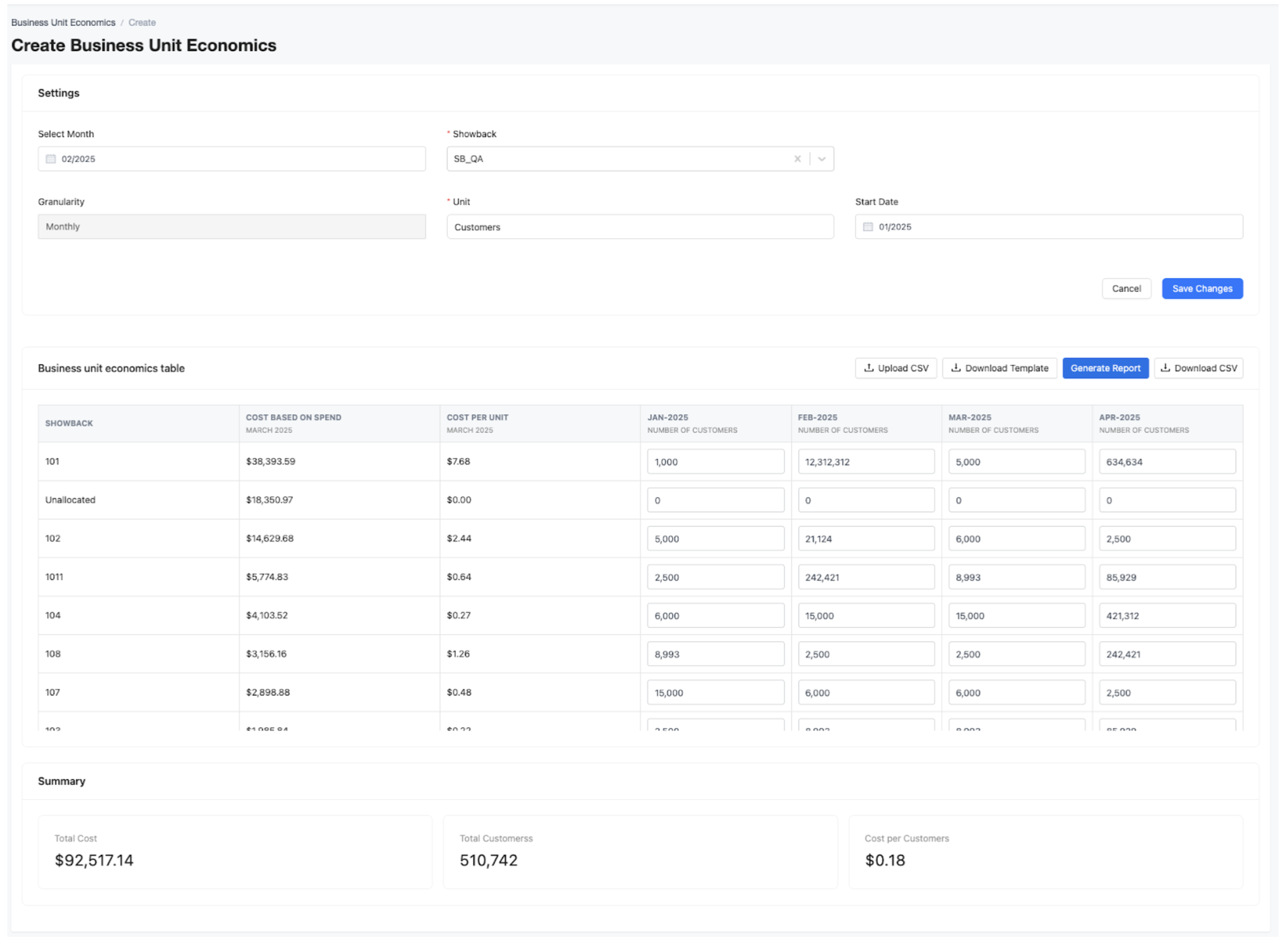
nOps is a cloud cost optimization and FinOps automation platform that aims to help organizations manage, analyze, and reduce cloud expenses for AWS, Azure, GCP, Kubernetes, SaaS, and GenAI workloads. It offers features like automated showback reports, savings recommendations, and MAP tracking to simplify cloud financial operations.
Key features include:
- Unified multicloud visibility: Centralizes cost and usage data across AWS, Azure, GCP, Kubernetes, SaaS, and GenAI.
- Cost analysis for finance and engineering: Offers prebuilt filters and views allowing cost breakdowns by account, service, team, and deployment.
- Custom dashboards and reports: Includes templates for finance, engineering, and leadership. Can schedule alerts and customize access by team.
- Tagless cost allocation: Automatically allocates costs using metadata like environment, usage type, or Kubernetes namespace.
- Shared cost distribution: Allocates shared costs (e.g., NAT gateways, support fees) using fixed splits, percentages, or proportional logic.
Limitations (as reported by users on G2):
- Limited to AWS: No current support for GCP and minimal support for other cloud providers
- 24-hour data lag: AWS CUR-based updates cause a delay in cost and usage data
- Cloud dependency: Platform is tightly coupled with AWS, reducing flexibility for multi-cloud users
- Compatibility issues: Lack of broader integration options beyond AWS
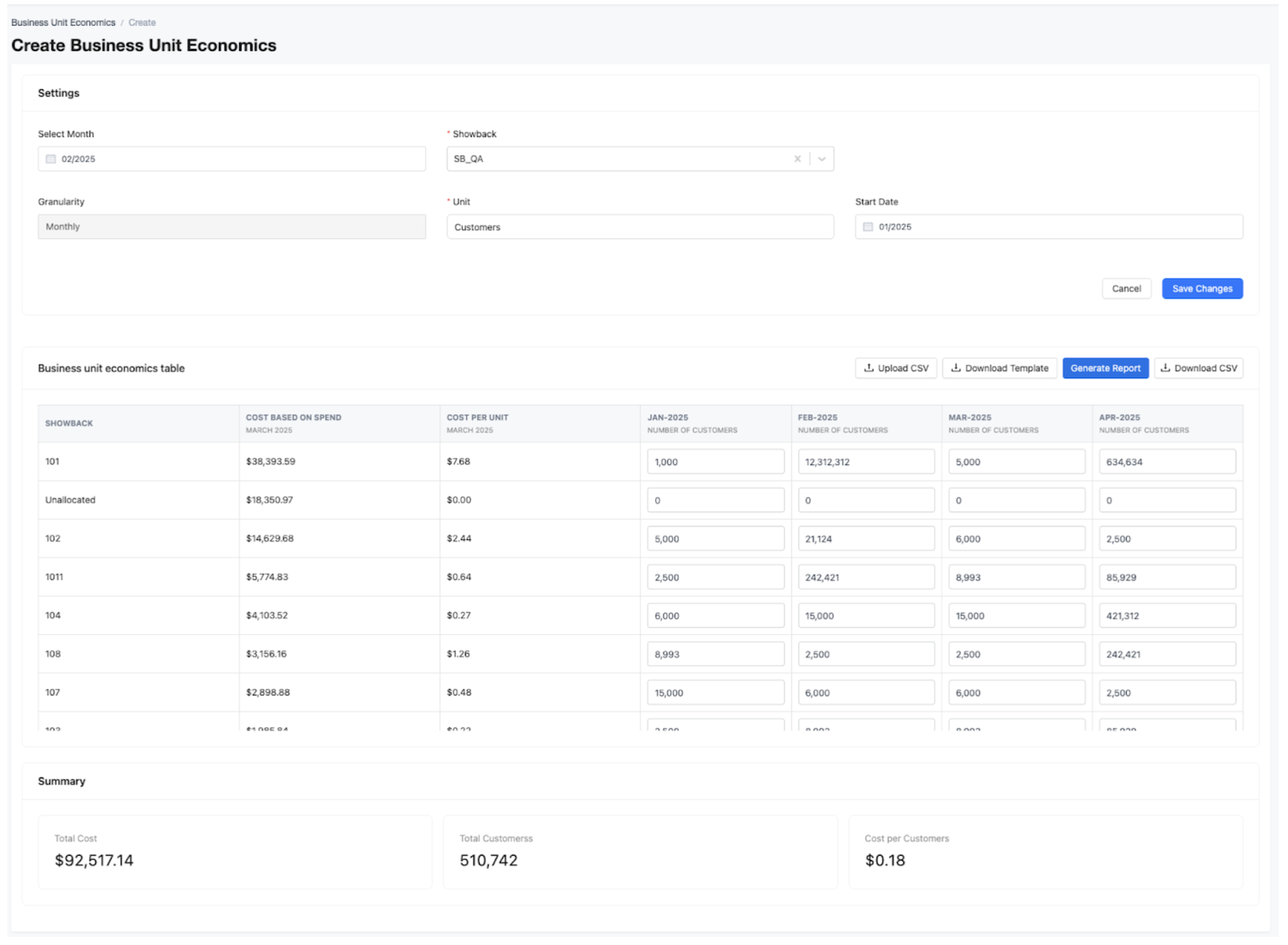
Source: nOps
3. CloudZero

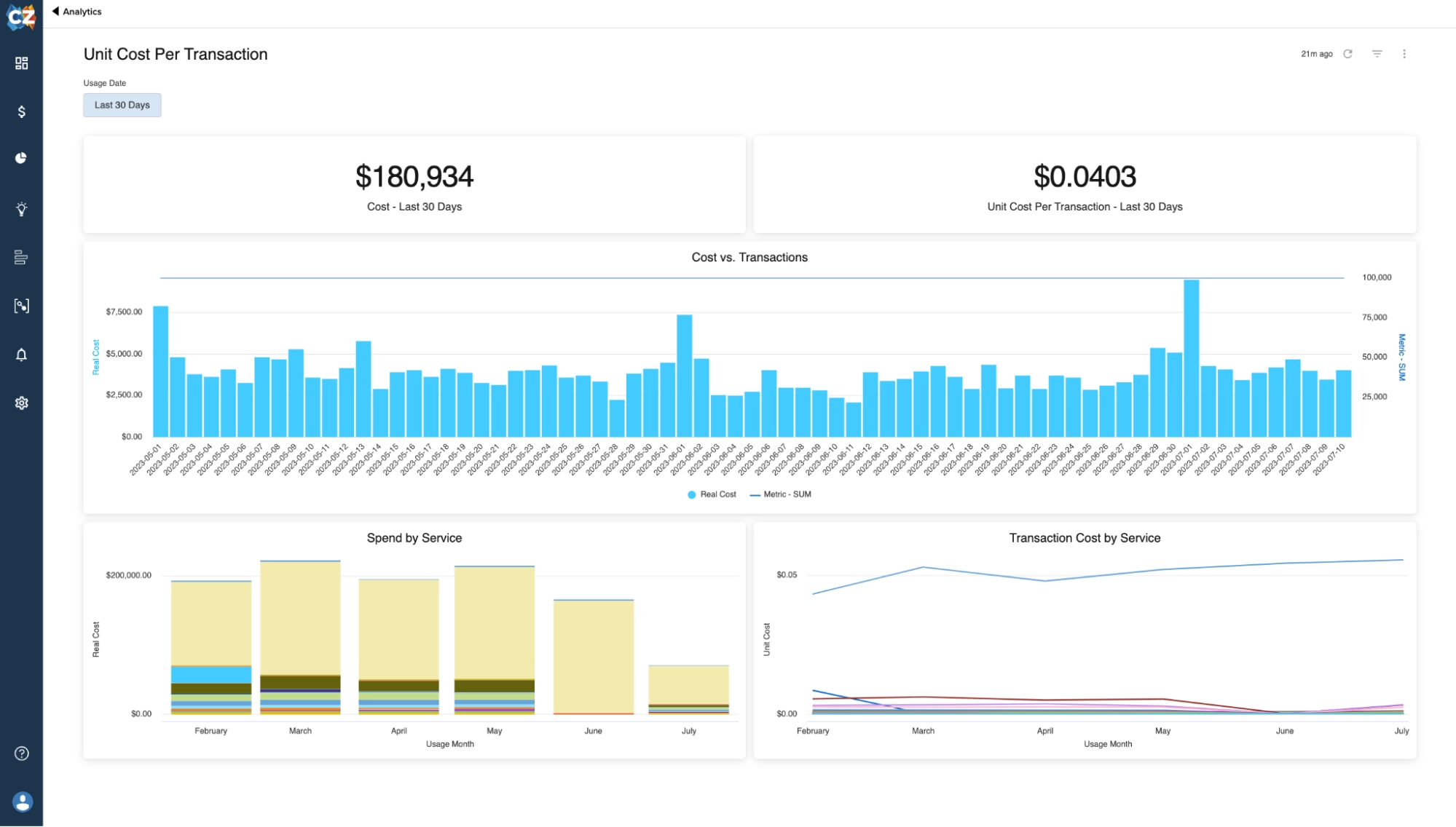
CloudZero is a cloud cost intelligence platform that allows organizations monitor and manage their cloud spending without relying heavily on manual tagging. It helps teams to understand where money is going by organizing spend by customer, product, or feature, and providing engineers with insights to reduce waste.
Key features include:
- Tagless cost allocation: Can automatically organize and allocate cloud spend without requiring tags.
- Spend by business dimension: Helps analyze costs by product, customer, environment, or feature to understand unit economics.
- Anomaly detection: Uses AI to detect abnormal spending patterns and alerts teams without manual configuration.
- Kubernetes cost breakdown: Allocates Kubernetes spend and combines it with other cloud data for visibility at hourly level.
- Full-stack cost visibility: Integrates cost data from cloud providers, SaaS platforms, and PaaS tools into a single view for better accountability.
Limitations (as reported by users on G2):
- Delayed billing data can cause issues in timely reporting
- Configuration challenges during setup may require white-glove support
- High renewal costs and limited support for some public clouds
- Weak reporting customization, especially in alert management and detailed usage views
- Lack of automation in optimization recommendations
- Steep learning curve for new users and limited dashboard customization options
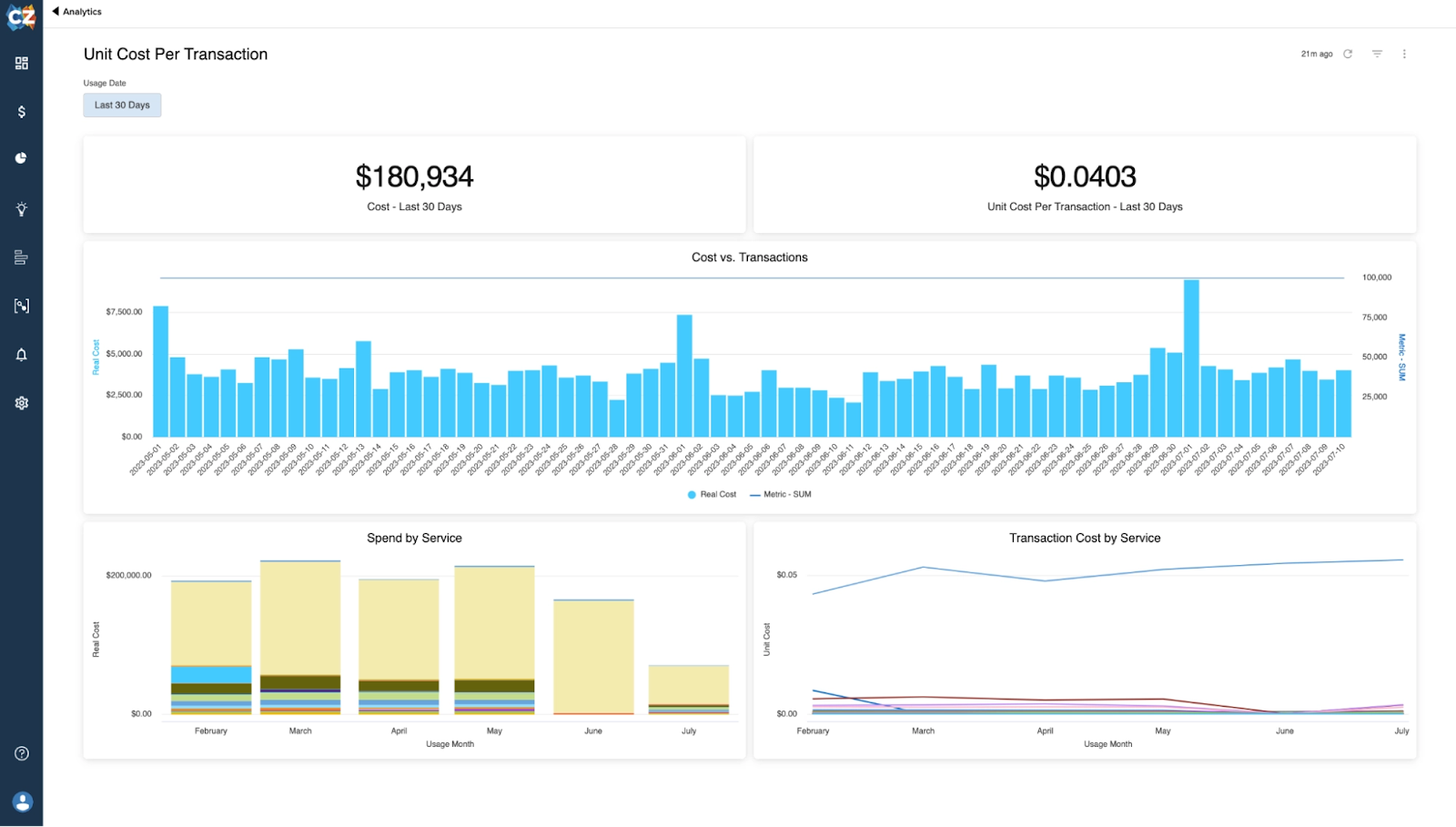
Source: CloudZero
4. Flexera One

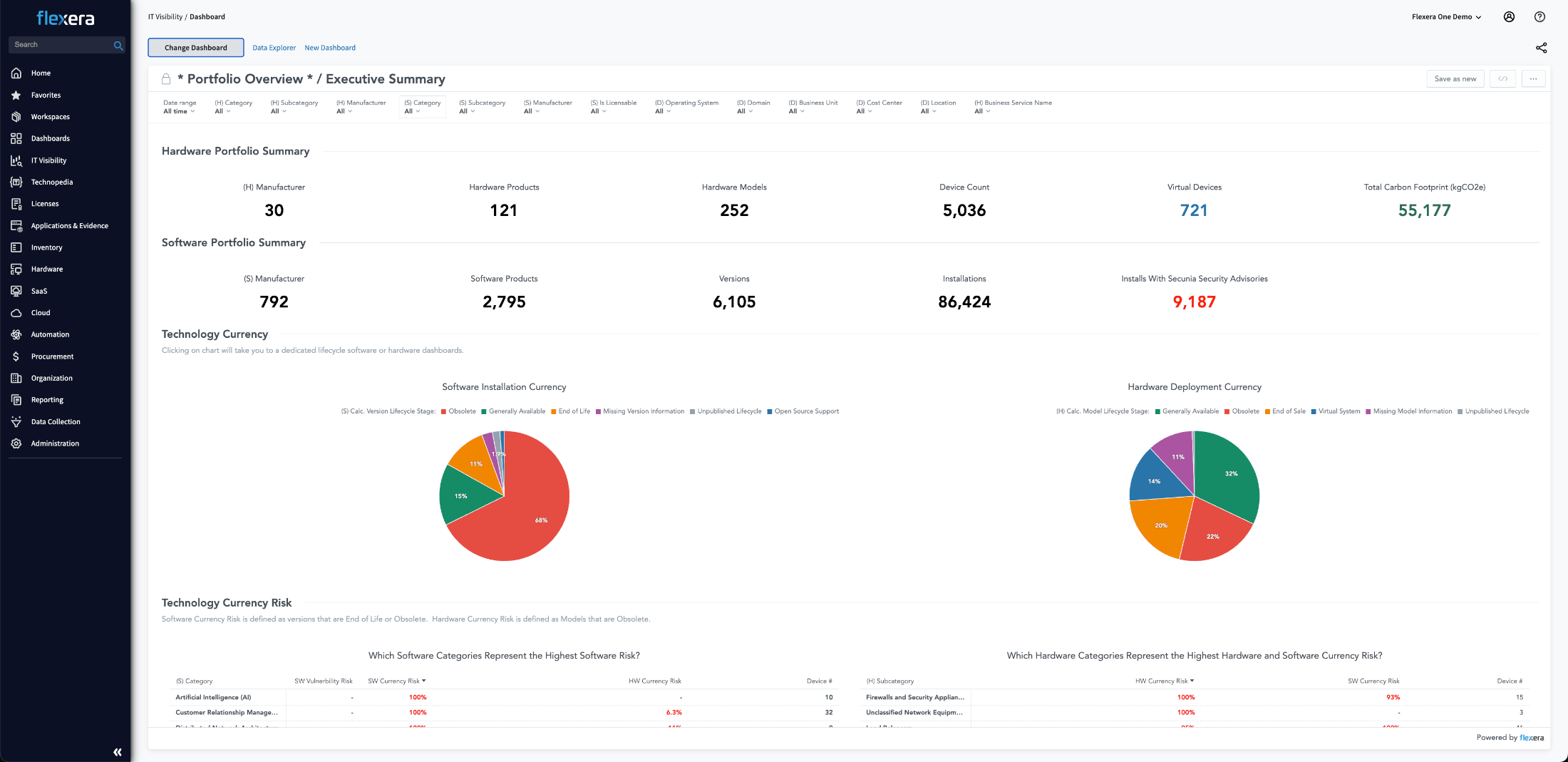
Flexera One is a SaaS platform to manage and optimize hybrid IT environments by integrating IT asset management (ITAM), SaaS management, and FinOps. Built on the Technology Intelligence Platform and enriched by Technopedia® data, it provides visibility across software, hardware, SaaS, cloud, and containerized workloads.
Key features include:
- Hybrid IT visibility: Offers an inventory of hardware, software, SaaS, and cloud assets across the organization.
- Cloud cost optimization: Helps achieve savings with insights into cloud usage and spend across business units, services, and cost centers.
- IT asset management (ITAM): Improves software license ROI by tracking usage, ensuring compliance, and identifying underutilized or obsolete assets.
- SaaS management: Can discover and manage SaaS applications across the enterprise, eliminate redundancy.
- Business-centric reporting: Aligns IT insights with business priorities using cost, risk, and usage data presented by service, team, or unit.
Limitations (as reported by users on G2):
- Steep learning curve and complex interface, particularly for first-time users
- Performance issues with large datasets, leading to slow response times
- Requires substantial training and support to configure and use effectively
- Setup complexity can delay time-to-value, especially in large environments
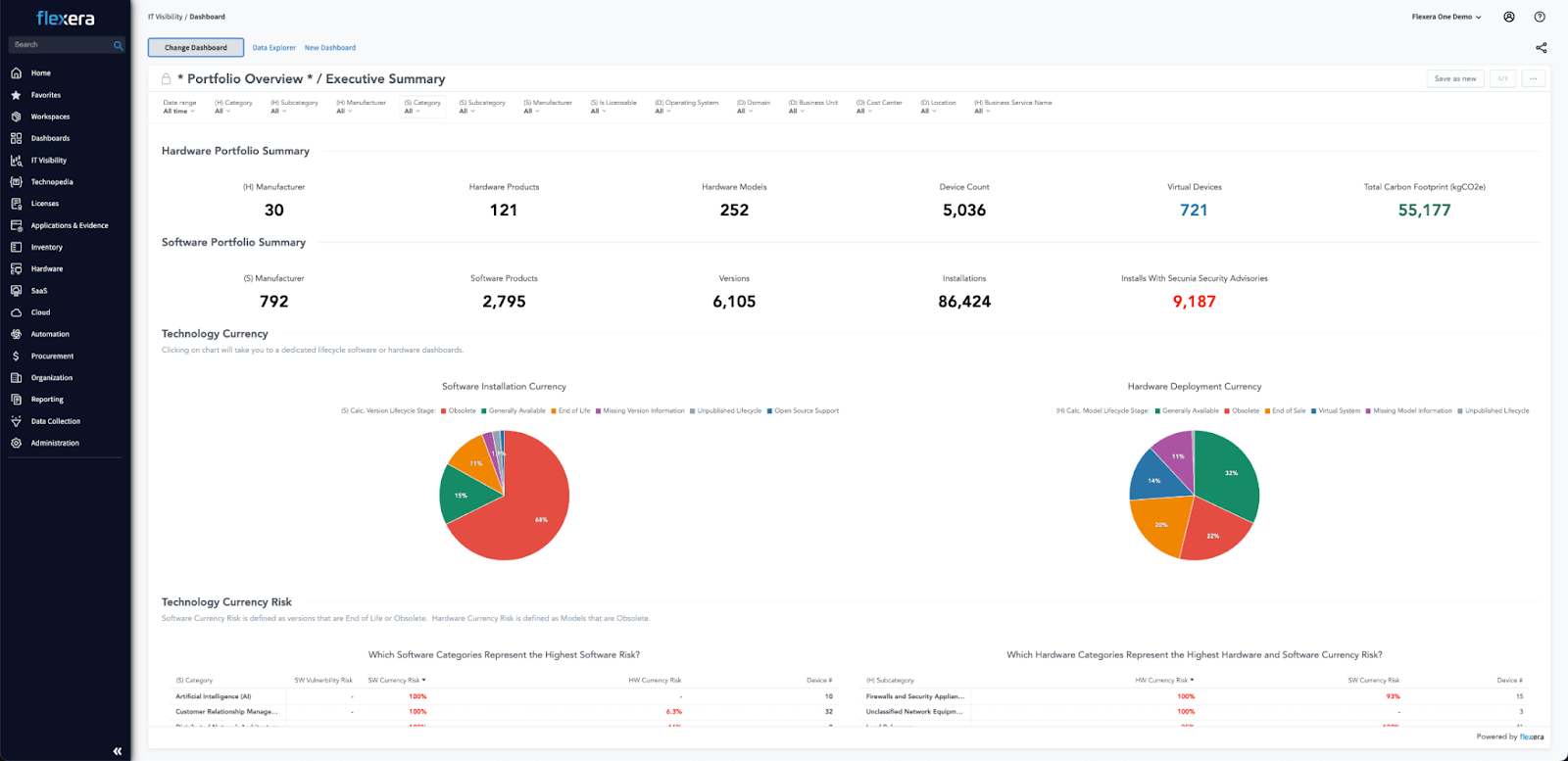
Source: Flexera
5. CloudCheckr

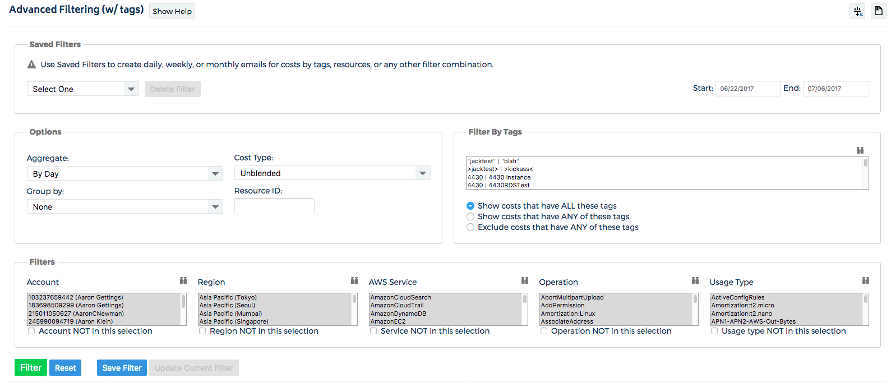
CloudCheckr, part of Spot by NetApp, is a cloud management platform to help enterprises and managed service providers (MSPs) optimize cloud spend, improve governance, and enforce security and compliance. It combines financial operations, resource optimization, and security management into one solution.
Key features include:
- Cloud cost visibility: Helps monitor current and historical cloud spend with usage analytics by service, resource, or team.
- Automated cost optimization: Can identify and act on opportunities to right-size resources, rebalance workloads, and purchase discounted commitments.
- Waste and inefficiency detection: Analyzes resource consumption trends, helps uncover underutilized assets, and removes inefficiencies.
- Chargeback and showback: Allocates cloud costs to business units, teams, or projects to enforce accountability.
- Security and compliance automation: Detects misconfigurations and vulnerabilities across cloud infrastructure with automated checks, including some self-healing actions to mitigate risk.
Limitations (as reported by users on G2):
- Outdated or inconsistent user interface; navigation is unintuitive for new users
- Alerts and reports can have up to a 3-day delay in reflecting usage or consumption
- Limited automation in rightsizing; recommendations can be inaccurate or unusable
- Reserved instance calculations are sometimes misleading or inaccurate
- Feature overload may overwhelm smaller teams or users with limited experience
- Lack of detailed training resources and certifications limits onboarding
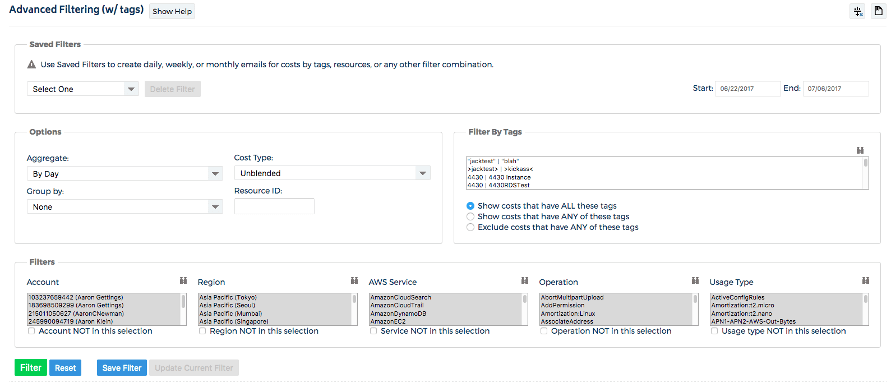
Source: CloudCheckr
6. Harness

Harness Cloud Cost Management is a FinOps solution to help organizations monitor, control, and optimize cloud spending across AWS, Azure, GCP, and Kubernetes. Supporting collaboration between finance, engineering, and operations teams, it uses AI-driven insights, conversational queries, and governance-as-code to identify savings opportunities.
Key features include:
- Conversational FinOps: Users interact with an AI assistant to ask natural language questions like “Where am I overspending?” and get cost breakdowns by team, service, or region.
- AI-based savings recommendations: Automatically identifies idle or over-provisioned resources, generates right-sizing plans, and recommends cleanup actions.
- Cost reporting and attribution: Attributes cloud costs accurately using Cost Categories and hierarchical structures for showback and chargeback.
- Cost perspectives for multi-cloud and Kubernetes: Helps visualize cloud spend with Cost Perspectives, enabling allocation across environments, teams, and business units.
- Anomaly detection: Detects abnormal cost spikes and helps prevent unexpected charges with alerting and automated remediation.
Limitations (as reported by users on G2):
- Missing or limited features, including inability to rename or delete toggles easily
- Confusing configuration process for feature flags, leading to potential errors
- Learning curve for new users; requires time and support to onboard effectively
- Complex UI elements (e.g., hidden scroll bars) make navigation difficult
- High pricing may be a barrier for smaller teams despite strong feature set
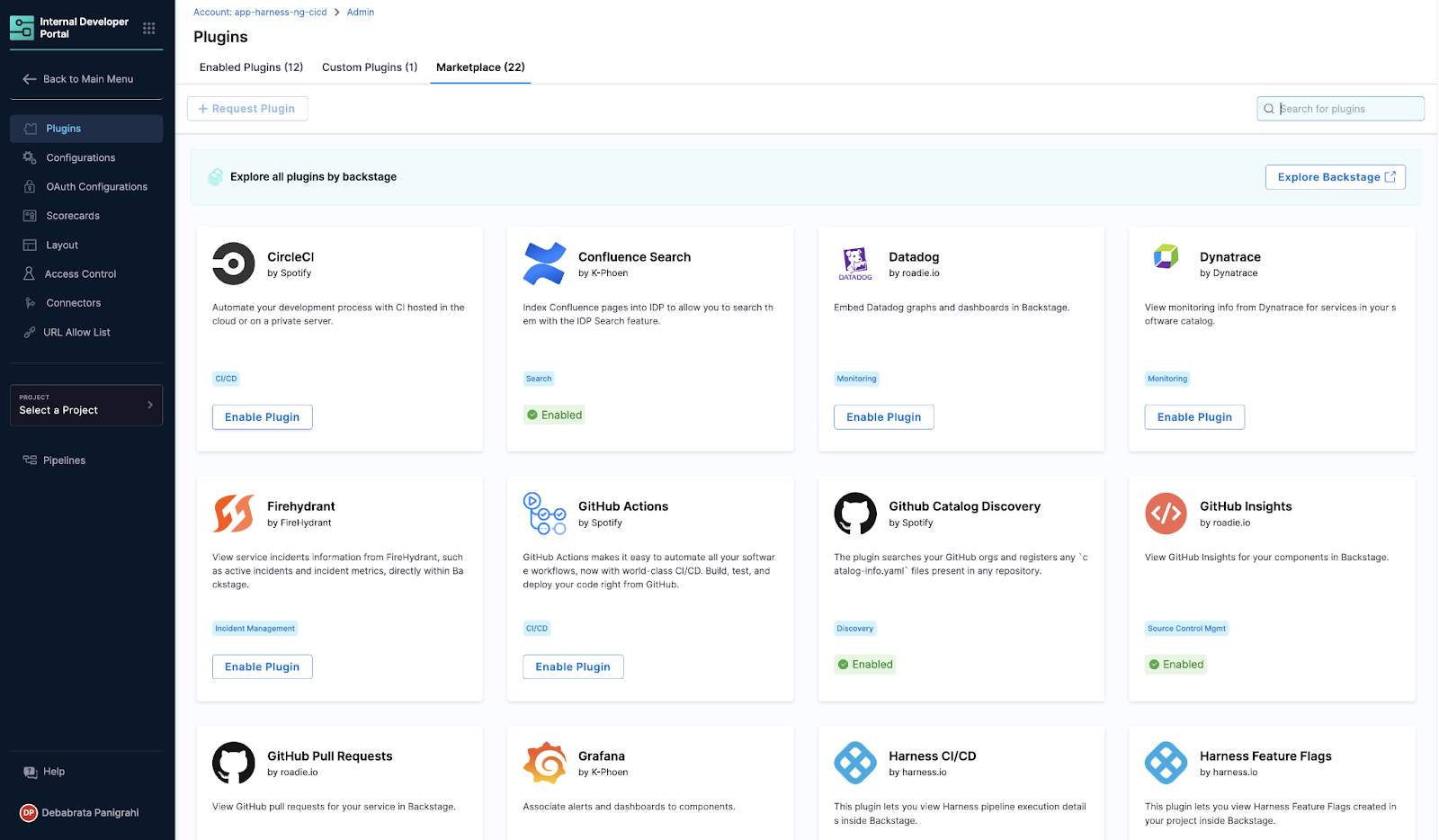
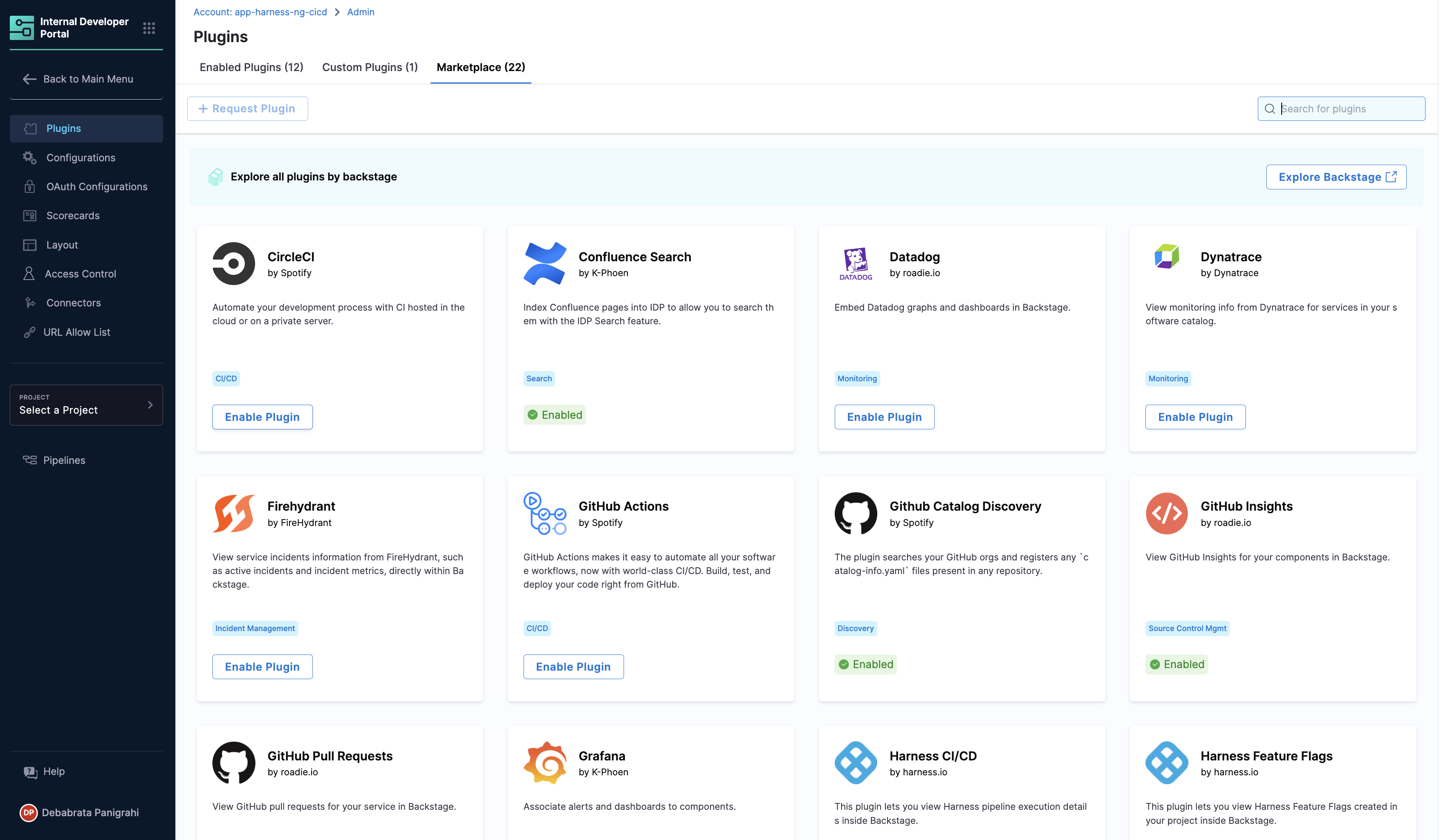
Source: Harness
Conclusion
Given Cloudability’s increasing limitations and IBM's shift in strategic focus following the Apptio acquisition, organizations should consider alternative platforms that align more closely with their cloud strategies. Many Cloudability users may find themselves needing broader multi-cloud support, more flexible automation, and less reliance on legacy tagging structures, needs that competitors are addressing more effectively.
As IBM further integrates Cloudability into its automation and AI stack, there's a real risk that innovation and usability for standalone FinOps use cases will decline. Teams seeking to maintain control over cloud costs and improve agility should actively evaluate modern, purpose-built FinOps tools.