














 Written By
Asaf Liveanu

What Is Oracle Cloud Infrastructure (OCI)?
Oracle Cloud Infrastructure (OCI) is a cloud services platform developed by Oracle Corporation to provide a suite of infrastructure services such as computing, storage, and networking.
OCI is designed to support mission-critical enterprise workloads with a focus on high performance, reliability, and security. It allows organizations to run applications and databases in a scalable environment while leveraging Oracle’s global network of data centers. The platform supports both traditional and cloud-native workloads.
OCI differentiates itself with a focus on providing high performance, hybrid cloud capabilities, and integration with Oracle’s enterprise software products. It offers flexibility for deploying applications in the cloud or in a hybrid mode spanning on-premises and cloud infrastructure. Its architecture emphasizes isolated network virtualization and off-box network virtualization to improve security and performance.
This is part of an extensive series of guides about [IaaS].
OCI Market Share and Evolution
As of 2025, Oracle Cloud Infrastructure (OCI) holds an estimated 12.43% share of the infrastructure-as-a-service (IaaS) market, ranking third overall. It is used by over 4,800 organizations globally, including large enterprises such as Vodafone, BMW, BlackRock, and Orange. The majority of its customers are large enterprises, with more than 1,000 companies having over 10,000 employees.
A key milestone in OCI’s recent growth is a major $30 billion multiyear cloud infrastructure deal, underscoring Oracle's growing role in hosting large-scale enterprise and government workloads. This deal highlights OCI’s ability to meet the requirements of massive, long-term deployments and signals growing confidence in its infrastructure capabilities.
OCI has grown in adoption across various regions, with the United States accounting for more than half of its customer base. Brazil and India also represent significant markets, highlighting OCI’s international expansion. The platform is widely used for services like cloud migrations, managed services, and digital transformation projects.
In terms of competition, OCI trails behind OpenStack (18.59% market share) and Presidio (14.78%) but leads over Oracle Cloud Services, Google App Engine, and Google Compute Engine in the IaaS segment. This positioning reflects OCI’s continued growth and investment in enterprise workloads, hybrid deployments, and multicloud integrations.
OCI Core Services and Components
Oracle Cloud Infrastructure (OCI) provides a range of services across compute, storage, networking, databases, and platform tools to support diverse workloads. OCI offers more than 150 cloud services, including:
- Compute services: OCI delivers flexible compute options including virtual machines, bare metal instances, and GPU-based computing. These are designed to support both traditional enterprise applications and modern workloads like AI and machine learning.
- Storage services: OCI includes multiple storage types, such as block volumes, object storage, and file storage. These are optimized for performance, scalability, and durability, accommodating everything from archival data to high-performance transactional workloads.
- Networking: OCI's networking services enable secure, high-performance connectivity within and across regions. Key features include virtual cloud networks (VCNs), load balancers, FastConnect for private connectivity, and integration with other clouds through multicloud networking.
- Databases: OCI offers Oracle Autonomous Database, Oracle Exadata, and support for open-source databases. These services are designed for high availability, performance, and automated management, making them suitable for critical business applications.
- Containers and Functions: Developers can run containerized applications using OCI Container Engine for Kubernetes (OKE) and serverless functions with OCI Functions. These services support cloud-native architectures and DevOps practices.
- Security and management: OCI includes tools for security, observability, compliance, and cost governance. These services provide access control, monitoring, automated compliance checks, and cost optimization features.
- AI, analytics, and integration services: OCI integrates AI and machine learning tools, analytics platforms, and application integration services. This allows organizations to process large datasets, build applications, and connect various systems across hybrid and multicloud environments.
Understanding OCI Pricing
Oracle Cloud Infrastructure (OCI) uses a transparent and consistent pricing model designed to reduce complexity and control costs across all services and regions.
Unlike many cloud providers, OCI offers uniform pricing globally, including in government and dedicated regions, helping organizations forecast budgets without regional price variations:
- Flexible compute and storage costs: OCI enables customers to fine-tune virtual machines by selecting exact CPU and memory configurations instead of pre-set bundles. This helps avoid overprovisioning and lowers costs. OCI also offers lower pricing on compute, block storage, and network services compared to other major cloud providers, often by 50% or more. For example, public bandwidth egress fees are up to 10 times lower than competitors, with the first 10 TB per month included for free.
- Cost controls and visibility: OCI provides native tools to help manage and optimize spend. Customers can set budgets, track usage through detailed reports, and receive cost-saving recommendations from Oracle Cloud Advisor. This proactive approach helps avoid unexpected bills and improve financial operations (FinOps).
- Universal credits and rewards: With Oracle Universal Credits, customers prepay for a pool of services and use them flexibly across OCI. This includes access to new services as they are released. Volume discounts are available, and the pricing remains fixed even if usage exceeds the credit amount. In addition, Oracle Support Rewards reduce on-premises support costs as customers increase OCI usage, offering further savings during cloud migration.
- Enterprise support included: OCI includes enterprise-grade technical support in its base pricing, covering production workloads without extra charges. This contrasts with other providers that often apply support fees based on usage or account tier, adding to the total cost.
Pricing Examples
OCI offers lower costs across several key services compared to other major clouds:
- A virtual machine with 4 vCPUs and 16 GB RAM on AMD processors costs $54 per month on OCI. This is 2.3x less than on AWS or Azure, and 2.1x less than on Google Cloud.
- A Kubernetes cluster with 64 vCPUs and 512 GB RAM costs $3,507 per month, again 2.3x less than comparable services on AWS and Azure.
- High-performance block storage (1 TB, 15K IOPS, 125 MB/sec) is priced at $43 per month, which is 5x cheaper than AWS and Azure.
- For data egress, transferring 50 TB per month costs $340 on OCI, compared to 13x more on AWS, and 10x more on Azure and Google Cloud.
OCI also includes 10 TB of free outbound data transfer each month, which helps reduce network-related costs significantly.
OCI Cost Optimization Strategies
Optimizing cost on Oracle Cloud Infrastructure (OCI) requires a mix of proper planning, resource management, and contract structuring. Most OCI customers use the Universal Credits model, which offers predictable billing based on a prepaid annual commitment. While overages are charged at the same rate as standard usage, any unused credits are forfeited, making cost control and usage optimization critical.
Budgeting and forecasting
Before migrating to OCI, Oracle provides a cost estimator tool to map your current IT estate to cloud services and project costs. Once deployed, organizations can set up budget thresholds and receive alerts when nearing limits. Regular reviews of cost and performance trends help in identifying underused resources or inefficient configurations.
Service selection and licensing
Choosing the right service tiers and licensing model is a key driver of cost efficiency. For instance, selecting the right Oracle Database edition (and understanding whether to use Bring Your Own License (BYOL) or License Included pricing) can prevent unnecessary charges. Misconfigurations here can lead to duplicate costs, especially if existing licenses are not properly accounted for.
Scaling strategies
OCI supports both vertical and horizontal scaling, and both should be used strategically. Workloads should be sized for high CPU utilization, typically targeting 80%, to avoid overprovisioning. OCI's Autonomous Database supports auto-scaling, allowing compute resources to scale up or down automatically. For application workloads, horizontal scaling lets teams add or remove instances based on demand.
In disaster recovery scenarios, keeping secondary environments at minimal capacity and scaling up only during actual failover events can significantly reduce standby costs.
Scheduled downtime and automation
For non-production environments, scheduling downtime can yield substantial savings. Organizations are encouraged to run these systems on a “12x5” schedule instead of 24x7. Automating instance shutdowns during off-hours ensures that resources are not running (and costing) when not in use.
Contracting and negotiation
OCI customers should negotiate contracts carefully. While Pay-as-You-Go offers flexibility, Universal Credits provide access to services at discounted rates. It's often advantageous to commit conservatively in initial contracts to avoid wasting unused credits. Accurate workload forecasting, including compute, storage, and uptime requirements, is essential.
Additional negotiation strategies include securing fixed discount tiers based on spend levels and defining overage terms in advance. Customers should also monitor for future price increases and plan to renegotiate terms as consumption grows.
Learn more in our detailed guide to OCI cost
Oracle Cloud Infrastructure Limitations
While OCI offers a range of features and pricing advantages, it also has several limitations that users should consider. These limitations can impact performance, flexibility, support, and overall user experience depending on the workload and use case.
Key limitations of OCI include (as reported by users on the G2 platform):
- Limited availability of Free tier resources: Servers with ARM processors (4 CPUs, 24 GB RAM) are often overloaded, resulting in delays or restrictions due to high demand on free-tier infrastructure.
- Compatibility issues with older software: OCI may not support certain legacy operating systems or older software versions, limiting its suitability for organizations running outdated systems.
- Steep learning curve for advanced features: Although basic setup is straightforward, configuring advanced options, such as traffic control or networking policies, can be complex and time-consuming for new users.
- Weakness in dynamic scaling: OCI virtual machine compute services lag behind leading platforms in terms of dynamic scalability, making it less effective for workloads that experience unpredictable or fluctuating demand.
- Outdated infrastructure and feature gaps: The platform is built on older architectures and lacks several modern features found in competing clouds, potentially limiting innovation and performance.
- Higher cost and vendor lock-in: OCI can be more expensive compared to other cloud providers. Additionally, tight integration with Oracle’s ecosystem can make it difficult and costly to migrate away.
- Slow and Rigid customer support: Users report delayed response times, even for critical issues. The lack of differentiated service levels (e.g., for Sev-0 vs. Sev-4 incidents) affects issue resolution and impacts business operations.
- Developer-focused api design: OCI’s APIs are powerful but require technical expertise. Non-developers or teams without strong coding skills may struggle to use these tools effectively.
- Limitations in archive storage: OCI Archive Storage is not ideal for data that needs real-time access or frequent retrieval. It also suffers from slow support response times and lacks prioritization options for urgent issues.
Notable Oracle Cloud Infrastructure Alternatives
1. Amazon Web Services (AWS)

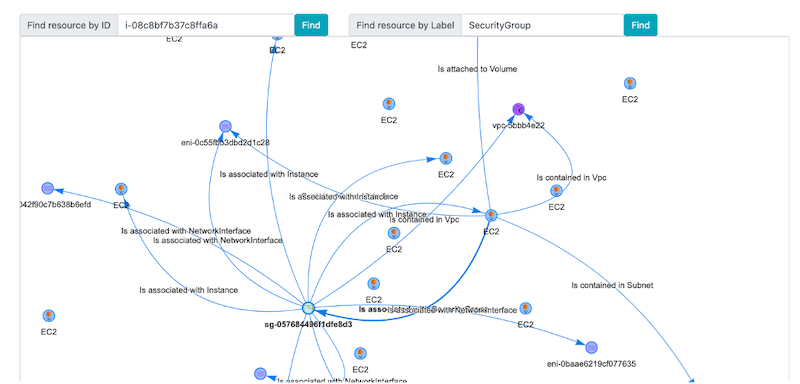
Amazon Web Services (AWS) is a cloud platform offering over 200 services from global data centers. It provides scalable and secure infrastructure for a range of applications, from startups to large enterprises. AWS's service offerings and global reach make it a popular choice for organizations seeking flexibility in the cloud.
Key Features:
- Compute services: Offers a variety of compute instances, including general-purpose, compute-optimized, and GPU-based options.
- Storage solutions: Provides scalable storage options like Amazon S3 for object storage, EBS for block storage, and Glacier for archival needs.
- Database services: Supports multiple database engines, including Amazon RDS for relational databases and DynamoDB for NoSQL solutions.
- Networking: Features a networking infrastructure with services like Amazon VPC, Route 53 for DNS, and Direct Connect for dedicated network connections.
- Security and compliance: Offers security features, including identity and access management, encryption, and compliance certifications across various industries.
Source: Amazon
2. Microsoft Azure

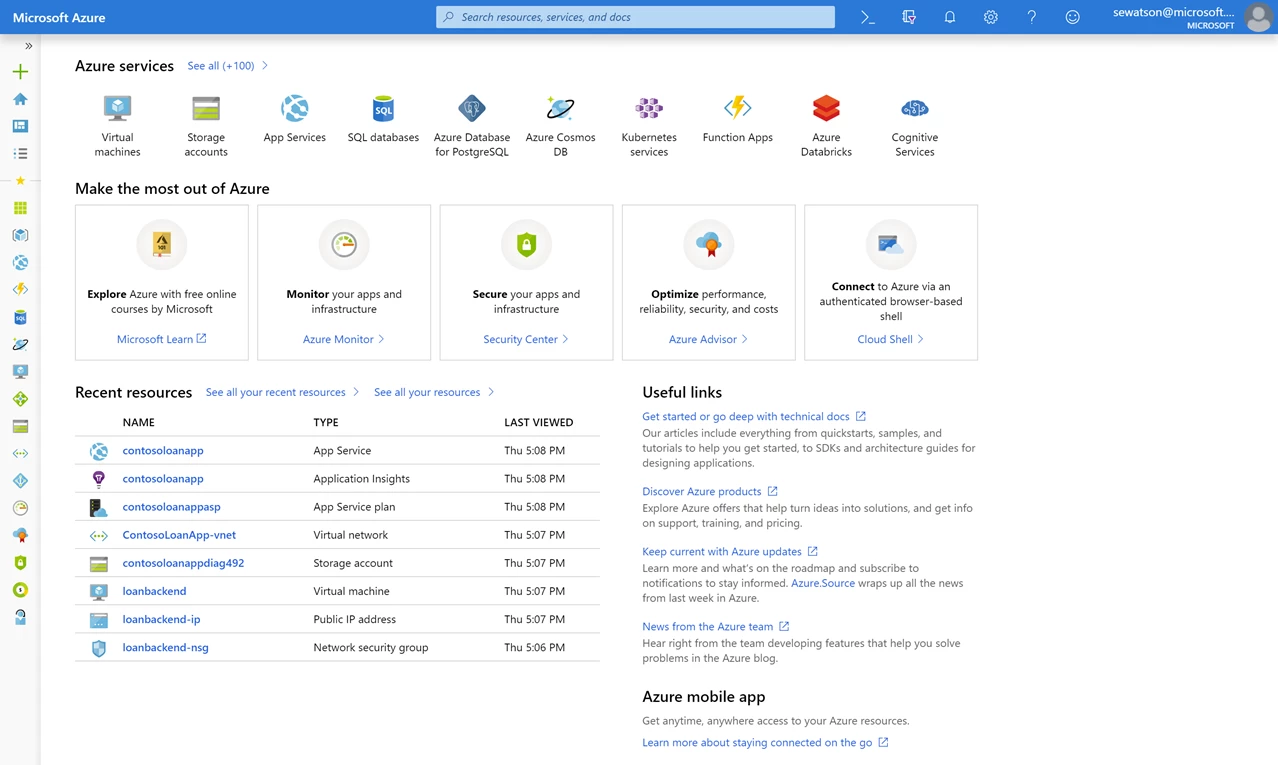
Microsoft Azure is a cloud computing platform offering a range of services, including computing, analytics, storage, and networking. It integrates with Microsoft's software ecosystem, making it an attractive option for organizations already using Microsoft products. Azure's global infrastructure supports various applications and services.
Key features:
- Compute options: Provides virtual machines, app services, and Azure Kubernetes Service (AKS) for container orchestration.
- Storage services: Offers scalable storage solutions like Azure Blob Storage, Disk Storage, and File Storage for various data needs.
- Database management: Supports multiple database services, including Azure SQL Database, Cosmos DB for NoSQL, and Azure Database for MySQL and PostgreSQL.
- AI and machine learning: Includes Azure Machine Learning and Cognitive Services for building intelligent applications.
- Security and identity: Features security measures with Azure Active Directory, role-based access control, and compliance tools to meet regulatory requirements.
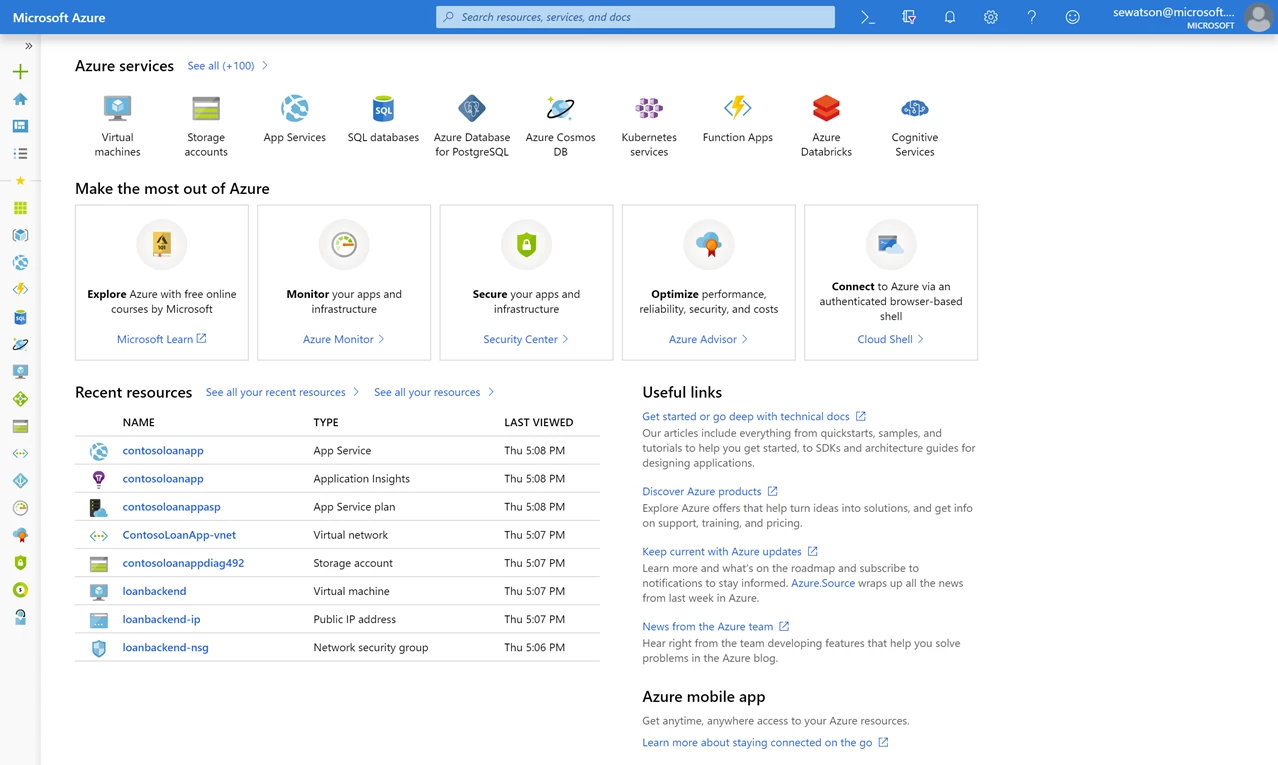
Source: Microsoft
3. Google Cloud

Google Cloud is a suite of cloud computing services that runs on the same infrastructure that Google uses internally for its end-user products. Google Cloud offers a range of services for computing, storage, machine learning, and application development, providing tools to build, deploy, and scale applications.
Key features:
- Compute services: Includes Compute Engine for virtual machines and Google Kubernetes Engine (GKE) for containerized applications.
- Storage solutions: Offers Cloud Storage for object storage, Persistent Disks for block storage, and Filestore for file storage needs.
- Big data and analytics: Provides BigQuery for data warehousing and analysis, Dataflow for stream and batch data processing, and Pub/Sub for messaging.
- AI and machine learning: Features Vertex AI for building and deploying machine learning models, and pre-trained APIs for vision, speech, and natural language processing.
- Security and compliance: Ensures data protection with Identity and Access Management (IAM), encryption, and compliance with global standards.

Source: Google Cloud
4. IBM Cloud

IBM Cloud offers a full-stack cloud platform that combines platform as a service (PaaS) with infrastructure as a service (IaaS). It provides a range of services, including compute, storage, networking, and AI, tailored for enterprise needs. IBM Cloud is known for its hybrid cloud capabilities and support for open-source technologies.
Key features:
- Compute services: Offers virtual servers, bare metal servers, and Kubernetes clusters for various computing requirements.
- Storage options: Provides Block Storage, File Storage, and Object Storage solutions to handle different data storage needs.
- AI and machine learning: Includes Watson services for natural language processing, machine learning, and AI model deployment.
- Hybrid cloud support: Enables hybrid cloud environments with IBM Cloud Satellite, allowing deployment of services across on-premises and cloud infrastructures.
- Security and compliance: Ensures enterprise-grade security with data encryption, identity and access management, and compliance with industry standards.
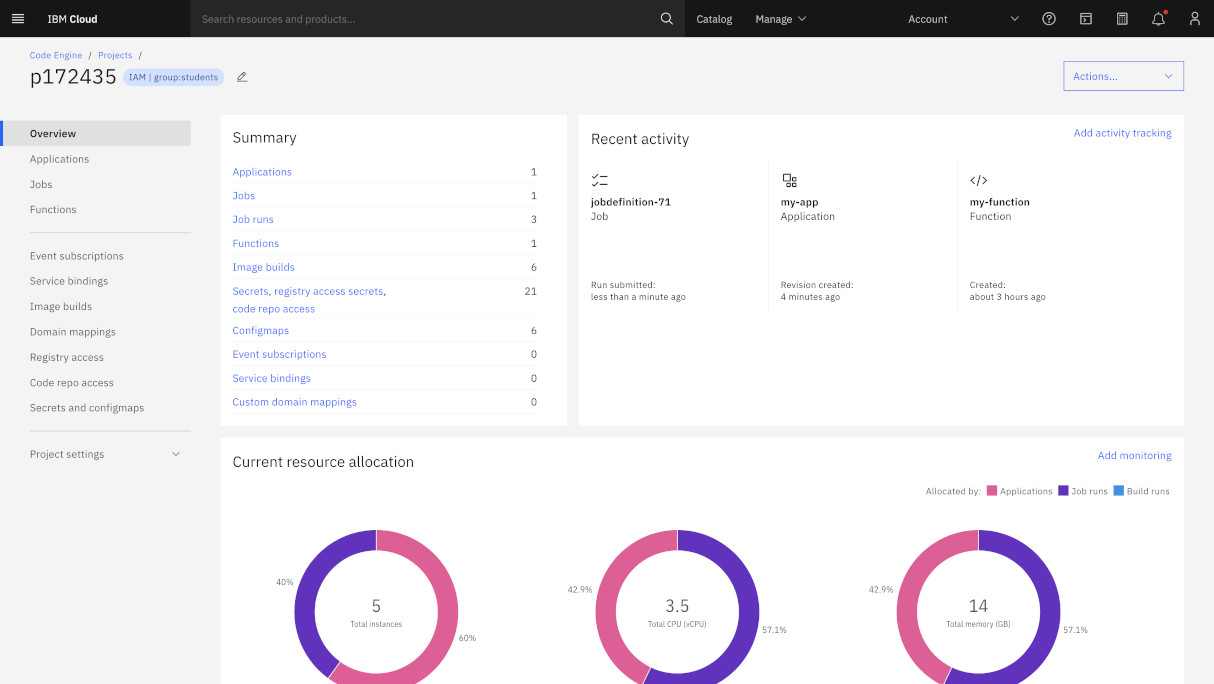
Source: IBM
Related content: Read our guide to oracle cloud alternatives (coming soon)
Optimizing Oracle Cloud Infrastructure Costs with Finout
Oracle Cloud Infrastructure offers a remarkably transparent and competitive pricing model, but at the enterprise level, managing that spend across departments, products, and multi-cloud environments still feels like unmanaged complexity. Finout changes the game by acting as a modern, centralized FinOps ecosystem that gives you 100% visibility into OCI alongside every other piece of your infrastructure.
- Unified OCI MegaBill: Finout’s patented data layer unifies OCI billing with AWS, Azure, GCP, and Kubernetes into a single, source of truth. By consolidating these siloed data streams, it eliminates the need to jump between consoles and ensures your finance and engineering teams are finally speaking the same language.
- Virtual Tagging: To solve the perennial headache of messy resource labeling, Finout uses Virtual Tagging to create a virtual allocation layer. You can map OCI costs to specific business dimensions like "cost per feature" or "cost per customer" using metadata and logical rules without requiring engineers to manually retag resources.
- Granular Kubernetes Visibility: Finout shines a light into the "black box" of OKE (Oracle Kubernetes Engine) by breaking down cluster spend by namespace, pod, and label. It then merges that data back into your primary business views for accurate, automated chargeback and showback.
- Proactive CostGuard Governance: Beyond historical reporting, Finout monitors OCI usage patterns to detect anomalies in real-time. It alerts you to cost spikes or resource misconfigurations before they impact your bottom line, ensuring your Universal Credits are used strategically.
- OCI Unit Economics: Finout moves beyond simple line-item tracking by linking OCI costs to business KPIs. This allows you to calculate metrics like "OCI cost per active user," helping leadership understand the direct relationship between cloud investment and business growth.
- Predictive Forecasting: Leverage historical OCI data to build accurate financial models. Finout’s forecasting engine accounts for seasonal trends and planned growth, allowing you to set granular budgets with automated alerts so you stay within your OCI budget limits.
See Additional Guides on Key IaaS Topics
Together with our content partners, we have authored in-depth guides on several other topics that can also be useful as you explore the world of IaaS.
CloudHealth
Authored by Finout
- [Guide] VMware CloudHealth: Solution Overview, Pros/Cons & Alternatives
- [Guide] CloudHealth Pricing Tiers and Contract Structure Explained
- [Webinar] Driving a Successful Company-Wide FinOps Cultural Change
- [Product] Finout | Enterprise-Grade FinOps Platform
Load Balancer
Authored by Radware
- [Guide] What is a Load Balancer? History, Key Functions, Pros and Cons
- [Guide] What Is Global Server Load Balancing (GSLB) & Top 3 Benefits
- [Blog] Case Study: Understanding the Impact of Slow Load Times on Shopping Cart Abandonment
- [Product] Radware Alteon | Application Delivery and Security
Citrix VDI
Authored by Venn

.svg)