













What Is Apptio?
Apptio is a technology business management (TBM) solution commonly used for IT financial management. It provides tools to quantify and optimize technology spending, making IT costs and benefits more transparent.
Apptio helps organizations plan, manage, and track technology investments, aligning IT spend with business goals. It enables data-driven budgeting, and forecasting, and facilitates cost-benefit analysis.
By leveraging real-time analytics and dashboards, Apptio provides insights into financial performance. It enables organizations to understand the cost allocation of IT resources and how these investments impact overall business objectives. Additionally, Apptio identifies inefficiencies and helps organizations transition to more cost-effective IT solutions.
Editor’s note: Updated the article to reflect Apptio features and limitations in 2026, and updated information about Apptio competitors.
Related content:
-
Read our guide to IBM Turbonomic
- Read our guide to Technology Business Management
Apptio History
Apptio was founded in 2007 by Sunny Gupta, Kurt Shintaffer, and Paul McLachlan in Bellevue, Washington. In 2009, Apptio was the first investment of venture capital firm Andreessen Horowitz, securing $14 million in Series B funding. Over the next several years, Apptio raised additional capital, bringing its total funding to $136 million by 2013. The company expanded internationally and opened offices in Australia, France, and Poland.
Apptio went public in 2016, raising $96 million in its IPO. However, two years later, it was acquired by private equity firm Vista Equity Partners for $1.94 billion. Under Vista's ownership, Apptio continued to grow, acquiring companies such as Digital Fuel, Cloudability, and Targetprocess.
In 2023, IBM acquired Apptio from Vista for $4.6 billion. With IBM’s recent acquisition of KubeCost, a cloud cost management tool, Apptio has become part of a suite of FinOps tools offered by the technology giant. This acquisition, and repositioning as one part of a complex suite of tools, is likely to reduce Apptio’s ability to innovate and respond to market changes in coming years.
Key Features of Apptio
Apptio TBM Unified Model
The Apptio TBM Unified Model (ATUM) is a framework that helps organizations manage and analyze IT costs with best practices in TBM. ATUM integrates financial data, such as operational expenses and capital expenditures, with IT services and product data, providing a clear view of how IT investments are aligned with business objectives.
Apptio uses the TBM taxonomy, a standardized cost terminology used across industries, making it easier to compare, benchmark, and allocate costs accurately. ATUM includes predefined allocation rules, which assign costs to specific business units or projects based on operational data.
Datalink
Datalink is a data integration tool within Apptio that automates the ingestion and structuring of data from over 350 source systems, including SAP, Oracle, Amazon Web Services (AWS), and ServiceNow. This automation eliminates manual data entry, ensuring that financial and operational data is always accurate, current, and ready for analysis.
Users can schedule uploads on a recurring basis—whether daily, weekly, or monthly—based on their organization’s needs. Additionally, Datalink provides alert notifications when uploads are completed. Beyond its out-of-the-box connectors, Datalink offers the flexibility to create custom connectors for different data sources, such as Windows Server files or REST services.
Apptio BI
Apptio BI is a business intelligence and reporting solution for data-driven decision-making. It provides reporting tools that allow users to generate custom reports or use pre-built templates, reducing the time and effort required to analyze data. Apptio BI enables users to create dynamic views of key metrics, making it easy for stakeholders of all levels to access the information they need.
The BI feature identifies opportunities for cost savings, risk reduction, or performance improvements, by automatically monitoring data and alerting users to significant trends or deviations. Its Action Plans option allows users to take immediate action on insights, assigning owners, targets, and deadlines.
Comments and Collaboration
Apptio's Comments and Collaboration feature enhances communication and transparency across teams by enabling real-time discussions directly within the platform. Stakeholders can add context and insights to reports and data visualizations through comments.
The use of @mentions allows individuals to be tagged, triggering email notifications and ensuring that relevant team members are engaged in the conversation without needing to leave the platform. By embedding these communication tools directly into the platform, Apptio removes the need for external collaboration tools, creating a centralized workflow.
IBM Apptio Costing
IBM Apptio Costing helps centralize and standardize how organizations manage technology costs. It replaces manual, spreadsheet-based processes by automatically consolidating financial and operational data from multiple systems into a unified framework. This framework uses standardized cost categories and allocation models, enabling organizations to create a consistent and shared view of IT spending across the business.
The platform focuses on improving cost transparency and enabling better decision-making. It helps organizations analyze spending, identify inefficiencies such as duplicate services or unnecessary vendor costs, and optimize overall IT investments.
IBM Apptio Planning
IBM Apptio Planning provides a structured environment for IT financial planning, budgeting, and forecasting. It brings together financial data into a collaborative workspace, replacing fragmented spreadsheets with a unified system that supports consistent planning processes. The platform automates data ingestion and standardizes cost categorization, enabling teams to build more accurate and repeatable financial plans.
The solution emphasizes continuous planning and adaptability. It supports AI-driven forecasting based on historical data and trends, helping organizations generate more accurate projections and respond to changing conditions. Features such as variance analysis allow teams to track differences between planned and actual spend, while continuous forecasting enables organizations to adjust budgets and investment strategies more frequently.
Apptio Limitations
Users on the G2 platform have reported several challenges that can impact the overall efficiency and usability of the Apptio platform:
- Complex initial setup and implementation: Users report that onboarding the platform can be time-consuming, with significant effort required for configuration, data tagging, and full deployment
- Steep learning curve for new users: The platform can feel overwhelming at first, with some users needing time to understand features, data models, and workflows
- Challenging data configuration and mapping: Setting up cost structures and mapping data across services and cost pools can be complex and difficult to manage
- User interface and usability issues: Some users note that the interface can feel cumbersome or not responsive enough, making navigation and interactions less efficient
- Time-consuming data processing: Tasks such as loading, validating, or updating data can take longer than expected, reducing operational efficiency
- Reporting complexity: Reports can include too much information or be difficult to customize, making it harder to quickly extract insights
- Integration limitations between modules: Users highlight challenges with how different modules connect, including limited bidirectional integration in some workflows
- Data reliability concerns: Some users mention the need to manually validate data, indicating occasional trust issues with data accuracy
- Performance and responsiveness issues: Slow performance has been reported in certain scenarios, impacting user experience
Apptio Competitors and Alternatives
IT Financial Management and Cloud Cost Management
1. Finout

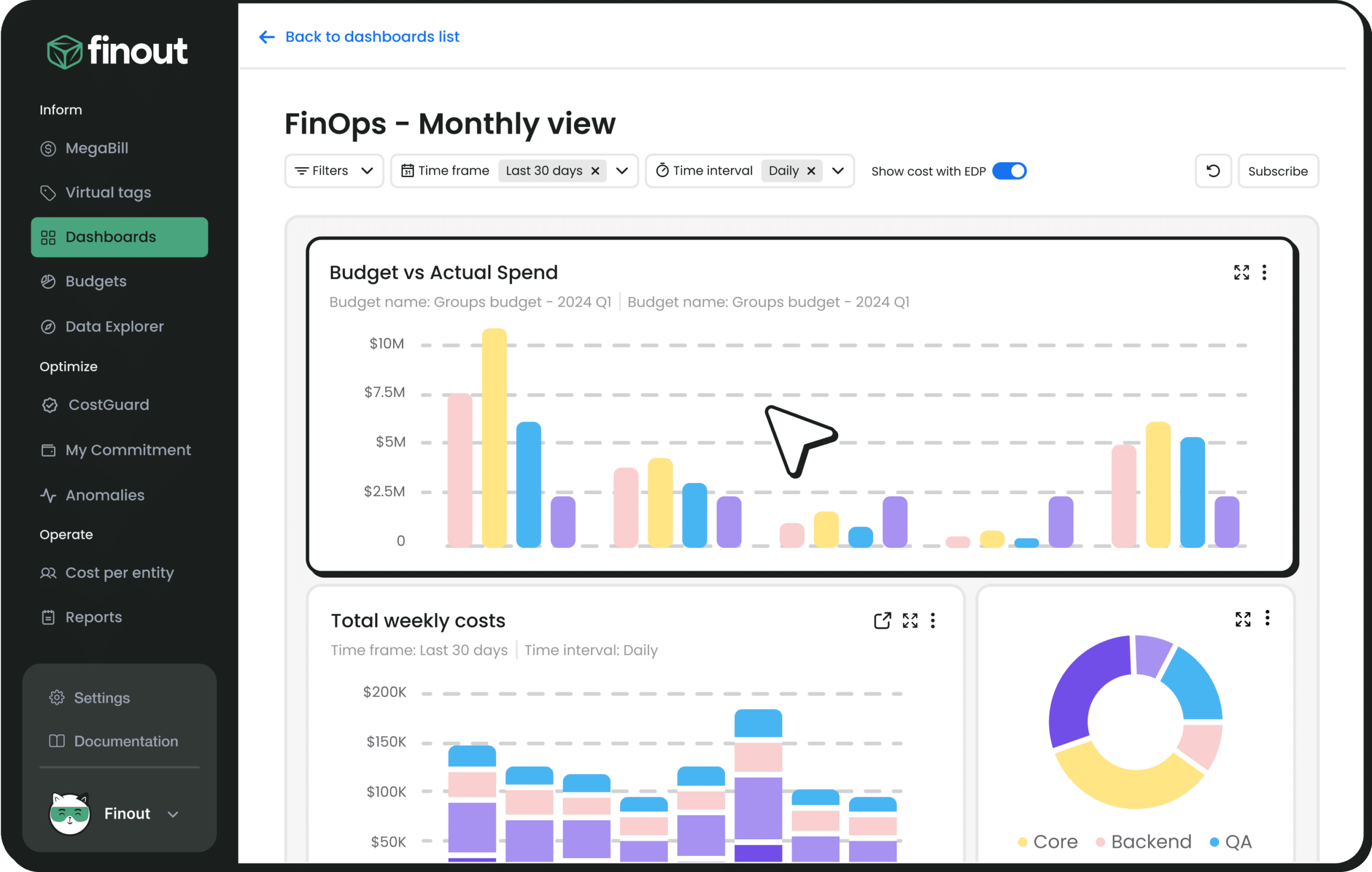
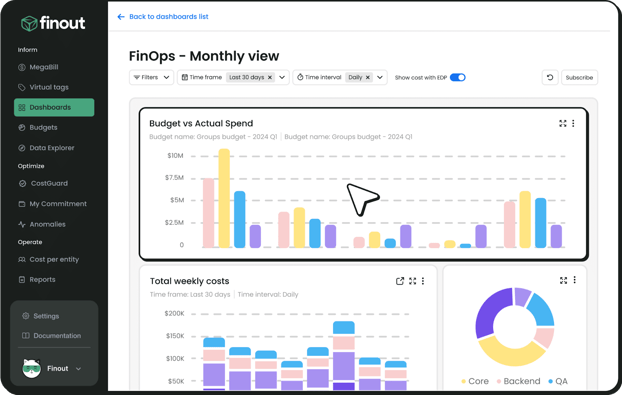
Finout and Apptio offer solutions for cloud cost management, but they cater to different needs and provide distinct approaches.
Finout focuses on delivering granular, real-time insights and unparalleled simplicity, making it ideal for businesses looking to centralize costs across multi-cloud environments, Kubernetes, and SaaS platforms. Its ease of integration, detailed unit economics tracking, and tailored cost breakdowns empower teams to act quickly and optimize resources effectively.
In contrast, Apptio emphasizes broader IT financial management, integrating cloud costs into high-level IT budgeting and planning workflows.
While Apptio excels in aligning cloud costs with enterprise-level financial processes, Finout is designed for agile teams seeking precise, actionable insights and flexibility in managing modern, decentralized cloud environments.
Source: Finout
2. IBM Turbonomic

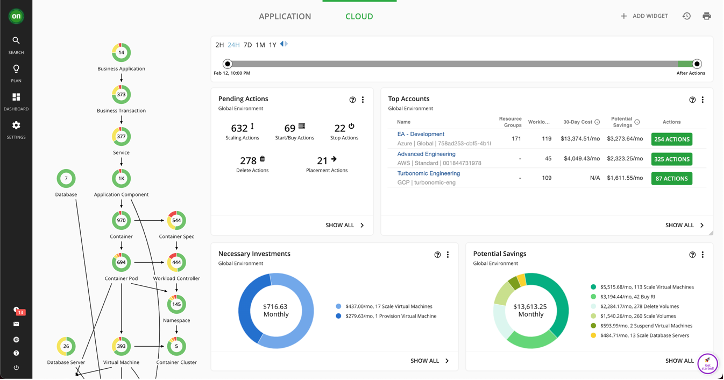
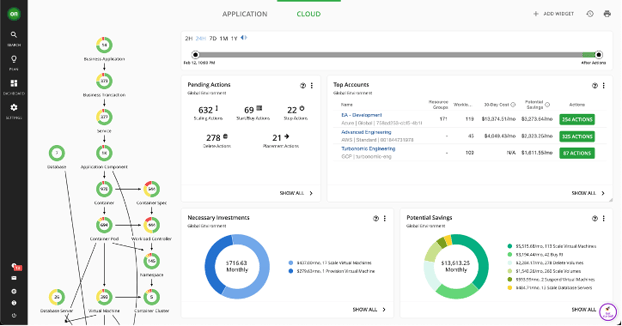
IBM Turbonomic focuses on application resource management across hybrid and multi-cloud environments. It uses real-time analysis of infrastructure and application demand to automate resource allocation decisions. Unlike Apptio, which emphasizes financial planning and cost transparency, Turbonomic operates closer to the infrastructure layer, continuously adjusting compute, storage, and network resources to maintain performance while reducing waste.
Key features include:
- Full-stack visibility: Continuously analyzes applications, containers, VMs, and infrastructure to map dependencies and resource usage.
- Real-time resource optimization: Automatically adjusts compute, storage, and network resources based on live demand.
- Automated workload scaling: Uses policy-driven automation to rightsize workloads and prevent overprovisioning.
- Kubernetes and cloud optimization: Optimizes containerized and cloud-native workloads with real-time scaling and cost control.
- Capacity planning and forecasting: Uses historical and real-time data to predict resource needs and maintain performance.
- Risk and performance management: Detects resource contention and misconfigurations before they impact applications.
Source: IBM
3. Flexera

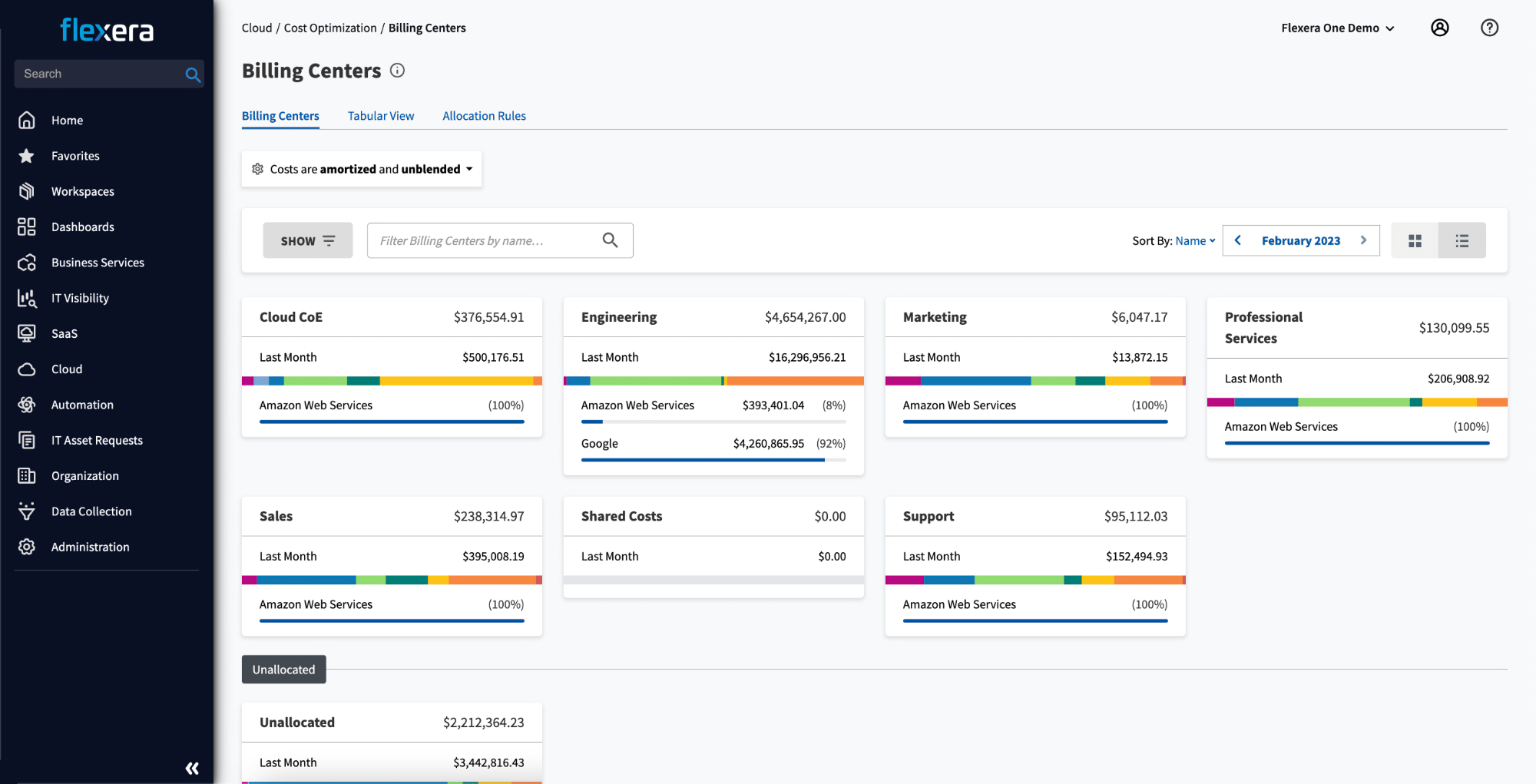
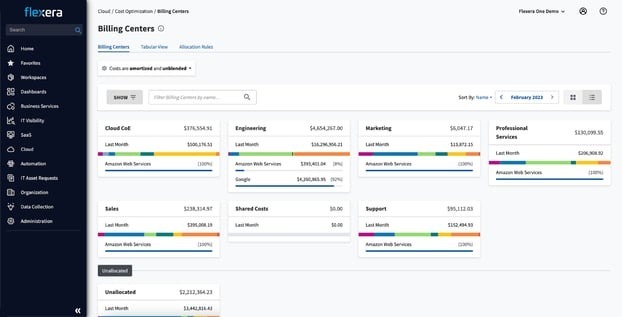
Flexera provides a unified platform that combines IT asset management, SaaS management, and FinOps capabilities. It aims to give organizations visibility across their technology estate, including hardware, software, SaaS, and cloud resources. Compared to Apptio, which focuses on IT financial management and budgeting, Flexera emphasizes broader technology visibility, compliance, and optimization across multiple domains.
Key features include:
- Unified IT visibility: Provides a consolidated view of hardware, software, SaaS, and cloud assets across the organization.
- Cost optimization and control: Identifies waste and optimization opportunities across cloud and software spend.
- IT asset management automation: Automates inventory tracking, usage monitoring, and lifecycle management.
- Compliance and risk management: Tracks license compliance, vulnerabilities, and regulatory requirements.
- Technology intelligence platform: Uses enriched data and analytics to improve decision-making and normalization of IT assets.
- Cross-domain insights: Connects ITAM, SaaS, and FinOps data to reduce silos and improve financial governance.
Source: Flexera
4. Nicus

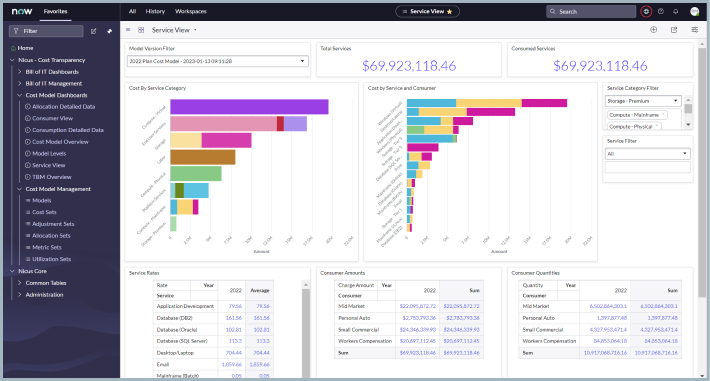
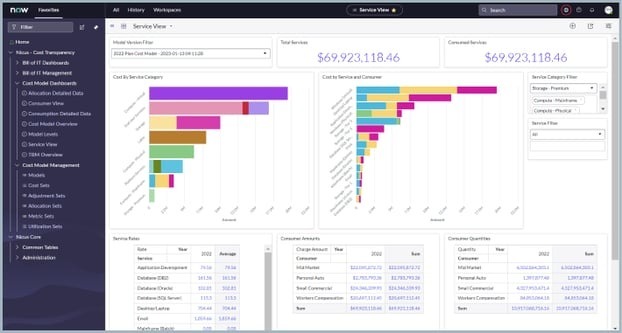
Nicus is an IT financial management and technology business management platform aiming to improve cost transparency and align IT investments with business goals. It focuses on connecting financial data with operational and strategic outcomes, helping organizations understand the value of their technology spend. Compared to Apptio, Nicus offers similar TBM capabilities but places strong emphasis on integrating financial insights into workflows.
Key features include:
- IT cost transparency: Provides visibility into IT spending to support optimization and reallocation decisions.
- Business alignment: Connects technology investments to business goals and outcomes.
- Service-based cost modeling: Structures costs around services to improve understanding of value delivery.
- Integration with ServiceNow: Embeds financial data into operational workflows for better decision-making.
- Planning and forecasting: Supports IT budgeting, forecasting, and financial analysis.
- ITFM services support: Offers implementation and advisory services to guide IT financial management practices.
Source: Nicus
IT, SaaS, and Procurement Management
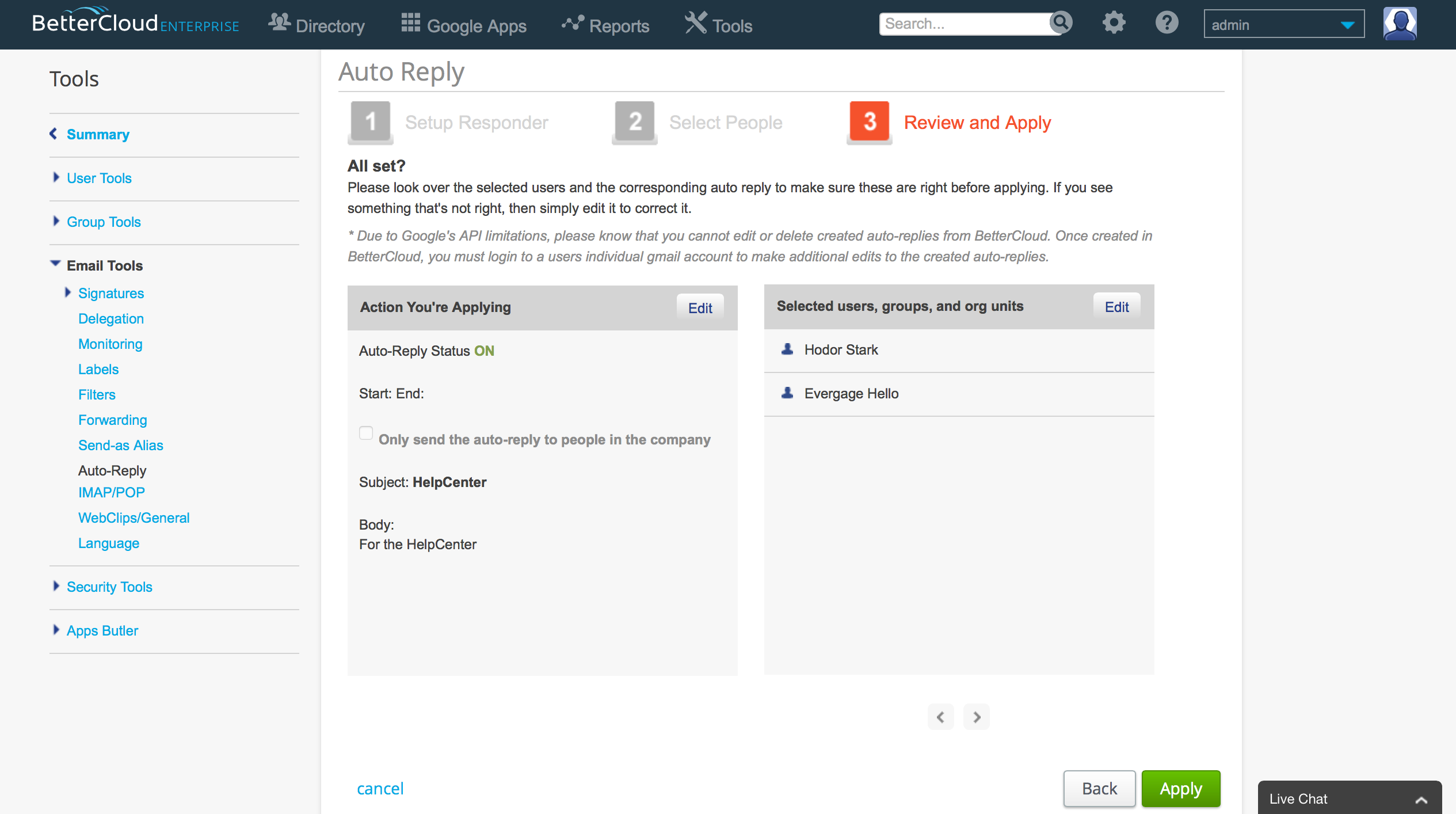
5. BetterCloud

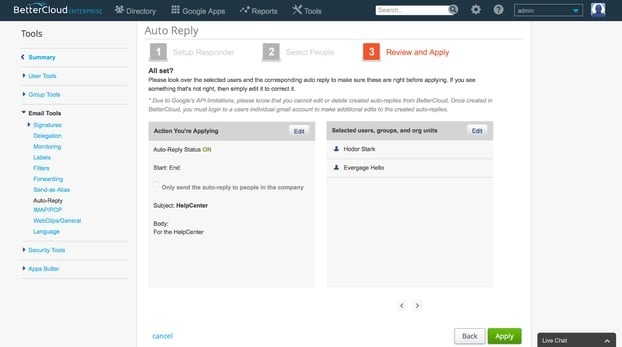
BetterCloud is a SaaS management platform focused on managing applications, users, and spend across SaaS environments. It enables IT teams to automate operations, control costs, and enforce security policies across a growing portfolio of SaaS tools. Unlike Apptio, which focuses on financial planning and cost modeling, BetterCloud is more operational, helping teams manage day-to-day SaaS usage and governance.
Key features include:
- SaaS spend management: Tracks application usage, licenses, and costs to reduce waste.
- Workflow automation: Automates onboarding, offboarding, and operational processes with no-code workflows.
- License and renewal management: Identifies unused licenses and manages contract renewals.
- Security and compliance controls: Enforces policies, manages permissions, and monitors for violations.
- Shadow IT detection: Identifies unauthorized applications and overlapping tools.
- Integration ecosystem: Supports integrations with multiple SaaS applications for centralized control.
Source: BetterCloud
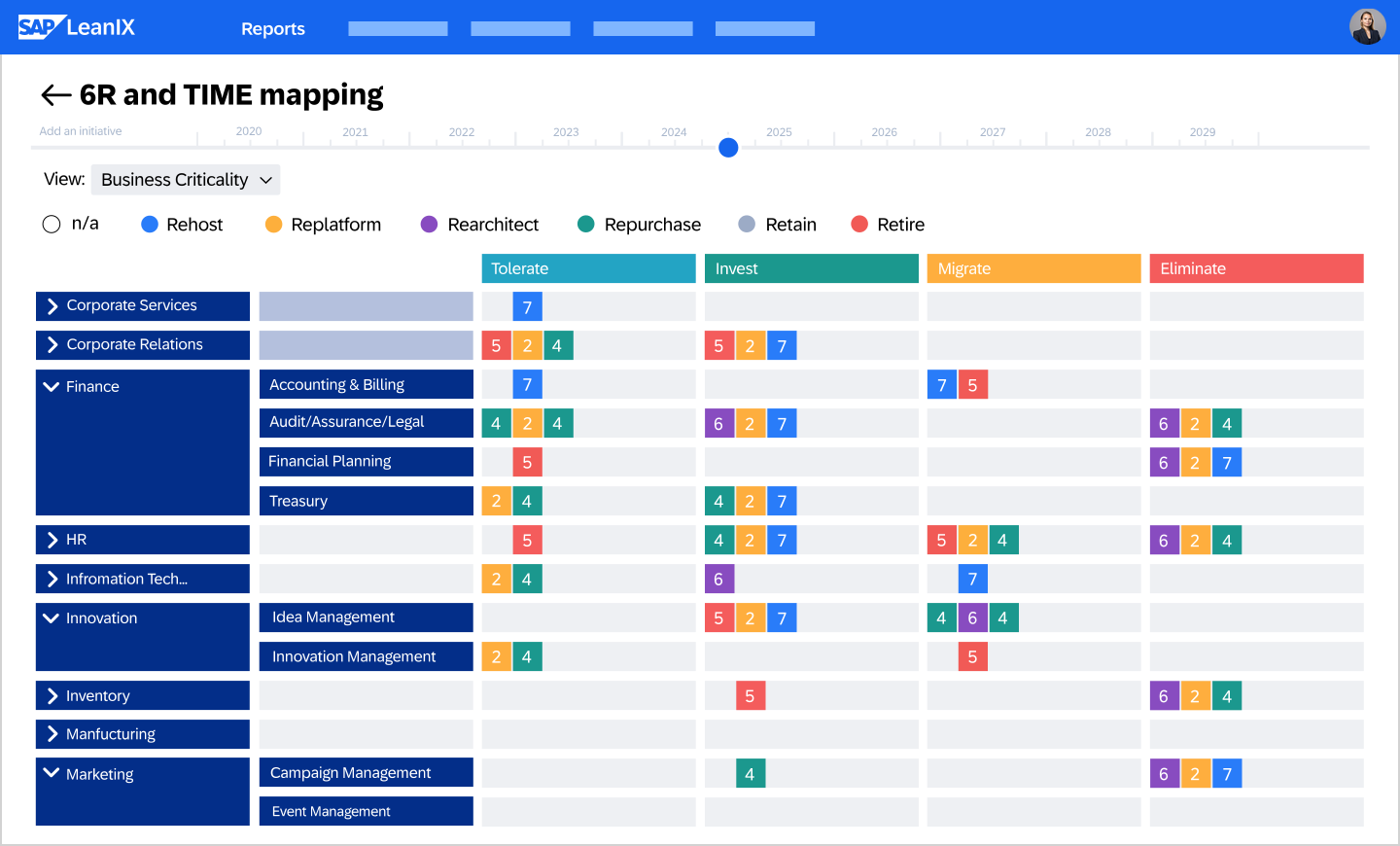
6. LeanIX
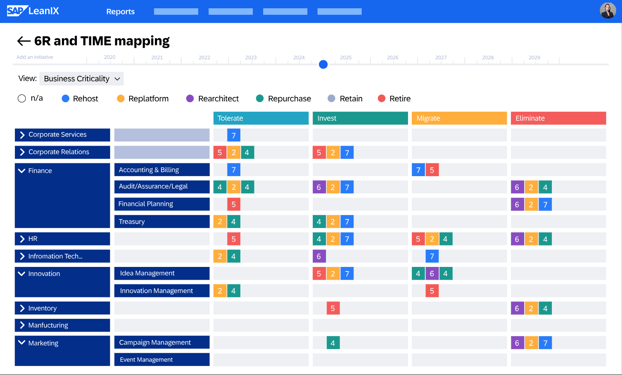
LeanIX is an enterprise architecture platform that provides visibility into an organization’s software landscape and supports technology transformation initiatives. It helps organizations understand dependencies across applications and plan changes. Compared to Apptio, LeanIX focuses less on financial management and more on architecture, risk, and transformation planning.
Key features include:
- Application landscape visibility: Maps all applications, dependencies, and IT components.
- Enterprise architecture management: Provides a centralized system of record for architecture data.
- Transformation planning: Supports ERP and digital transformation initiatives with structured insights.
- Risk identification: Highlights risks related to software dependencies and outdated systems.
- Single source of truth: Creates a unified view of IT systems for stakeholders.
- Change management support: Helps plan and manage changes across complex IT environments.
Source: LeanIX
7. Vendr

Vendr focuses on SaaS procurement and pricing optimization, helping organizations manage software purchasing and vendor negotiations. It provides access to benchmarking data and automates parts of the negotiation process. While Apptio helps track and allocate IT spend, Vendr operates earlier in the lifecycle by helping organizations reduce costs during procurement and renewal stages.
- Pricing intelligence: Provides benchmarks based on real-world software pricing data.
- Automated negotiations: Uses automation to manage vendor negotiations and improve outcomes.
- Contract analysis: Identifies overcharges, renewal risks, and negotiation opportunities.
- Procurement workflow integration: Integrates into existing procurement systems and processes.
- Renewal management: Tracks upcoming renewals and identifies savings opportunities.
- Savings optimization: Helps reduce SaaS costs through data-driven negotiation strategies.
.png)
8. Productiv

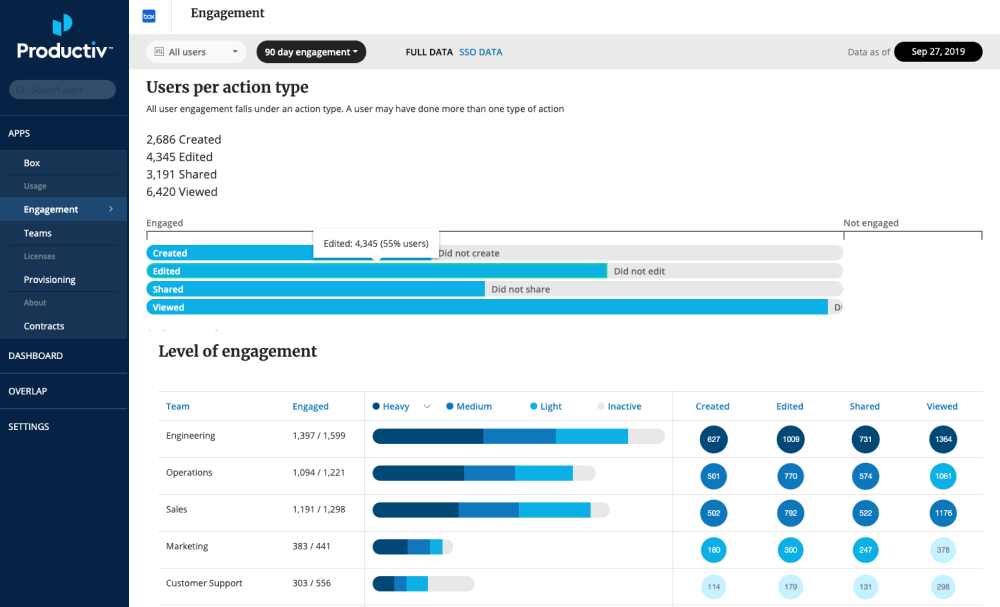
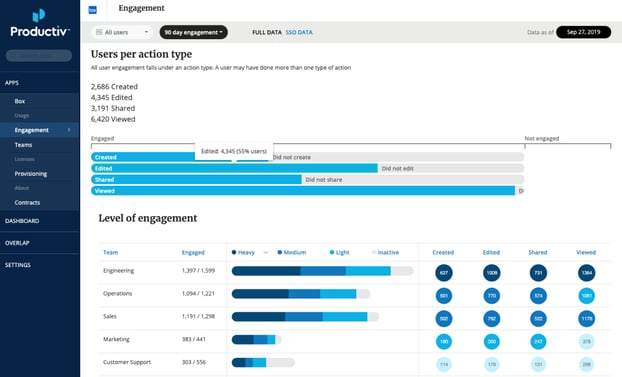
Productiv is a SaaS management platform that provides visibility into application usage, spending, and risk across an organization. It focuses on helping teams manage SaaS portfolios, including emerging areas like AI tools. Compared to Apptio, Productiv is more focused on operational SaaS visibility and governance rather than financial modeling.
Key features include:
- Application usage visibility: Tracks all SaaS applications and how they are used across teams.
- Shadow IT and AI detection: Identifies unauthorized tools and emerging AI applications.
- License and contract tracking: Monitors renewals, usage, and underutilized licenses.
- Spend and optimization insights: Highlights redundant tools and cost-saving opportunities.
- AI governance: Tracks AI adoption, usage, and associated risks.
- Centralized SaaS inventory: Provides a single view of applications, contracts, and usage data.
Source: Productiv
Conclusion
Apptio offers a robust solution for IT financial management, but it’s not the only option available. The eight competitors outlined here provide varied approaches, from SaaS management and cloud cost optimization to IT asset visibility and financial operations automation. As technology needs evolve, these platforms help organizations align IT spending with strategic goals, mitigate risks, and enhance decision-making, allowing for greater agility and adaptability in a rapidly changing market.

.svg)