Kubernetes cost management solutions involve a combination of strategies and tools to monitor, analyze, and optimize cloud spend. Key solutions include tools for granular cost allocation and reporting, automating resource rightsizing and scaling, detecting idle or over-provisioned resources, and implementing best practices like resource cleanup and workload placement optimization.
Many Kubernetes cost management platforms provide dashboards and reporting features to visualize where cloud spend is happening within clusters. They often integrate with existing monitoring and observability tools, allowing users to correlate cost with performance data and application metrics. This supports better decision-making for budgeting, forecasting, and continuous optimization in cloud-native environments.
This is part of a series of articles about Kubernetes cost optimization
In this article:
Kubernetes enables dynamic resource scaling, but without proper controls, this flexibility can lead to unexpected cost spikes. Cost optimization ensures efficient use of cloud resources, prevents overspending, and aligns infrastructure usage with business goals.
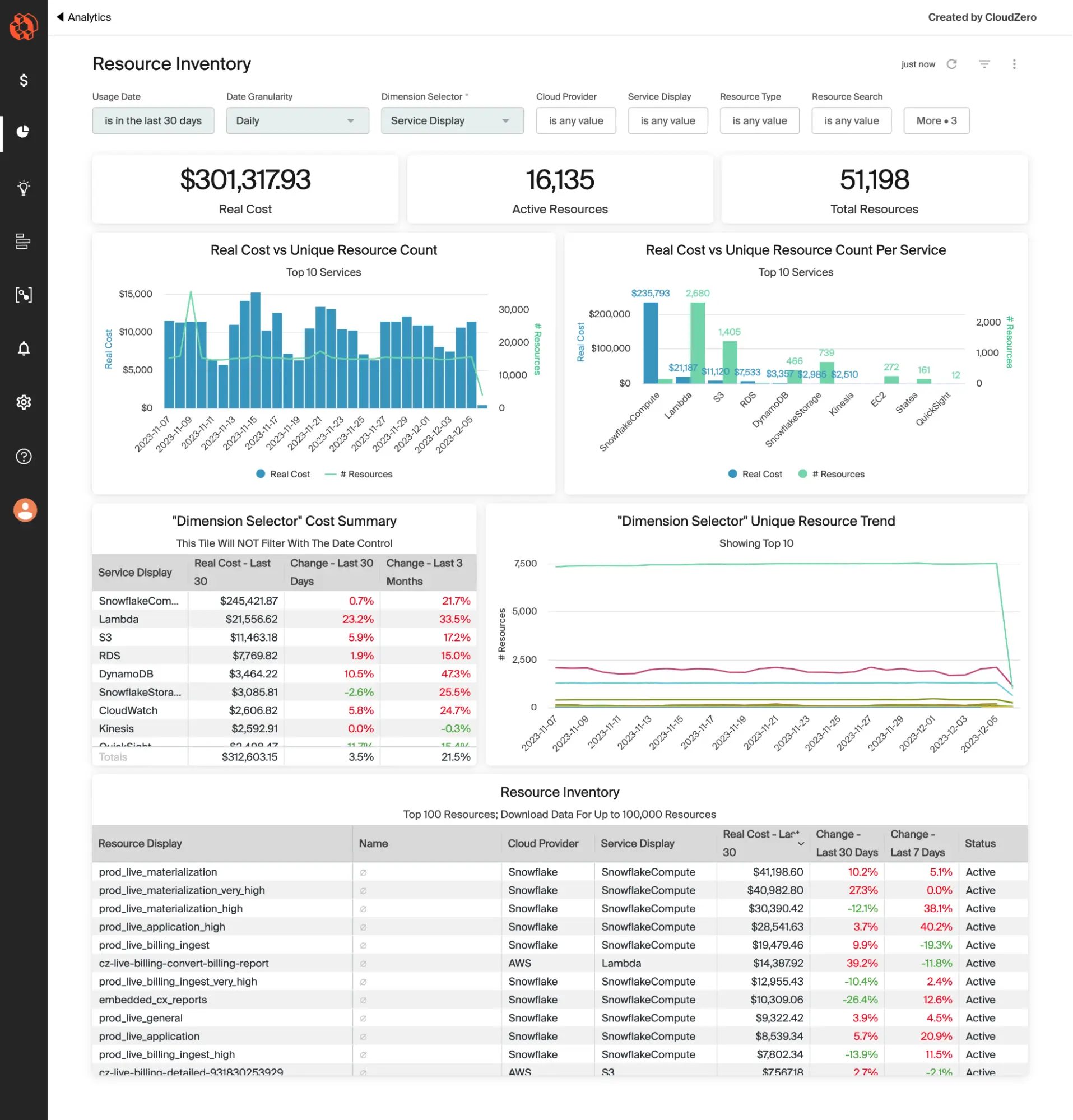
Finout is an enterprise-grade FinOps platform that provides a unified "MegaBill" to manage Kubernetes costs alongside all other cloud and SaaS expenses. Unlike tools that require heavy in-cluster agents, Finout leverages existing monitoring data (like Prometheus or Datadog) to provide 100% cost allocation without changing code or adding operational overhead.
Key features include:
Source: Finout
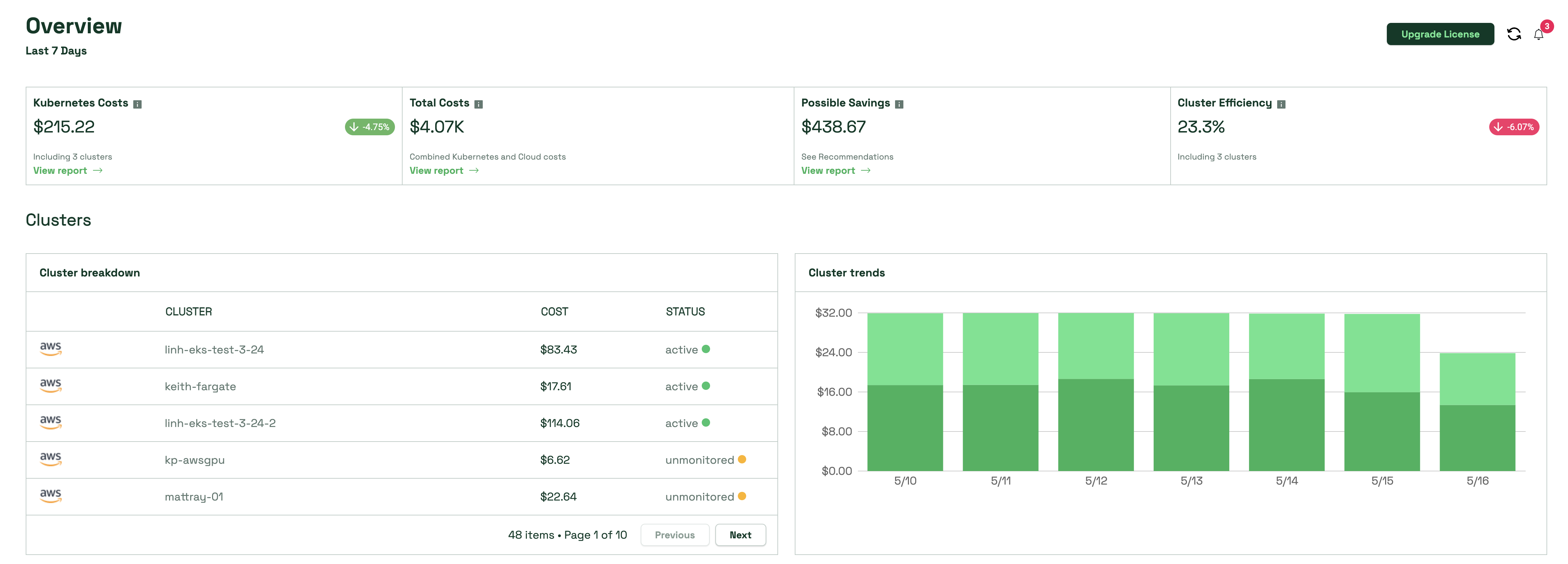
Kubecost provides Kubernetes cost visibility, allocation, and governance across clusters. It tracks spend against Kubernetes concepts and reconciles costs with the cloud bill to support showback and chargeback.
Key features include:
Source: KubeCost
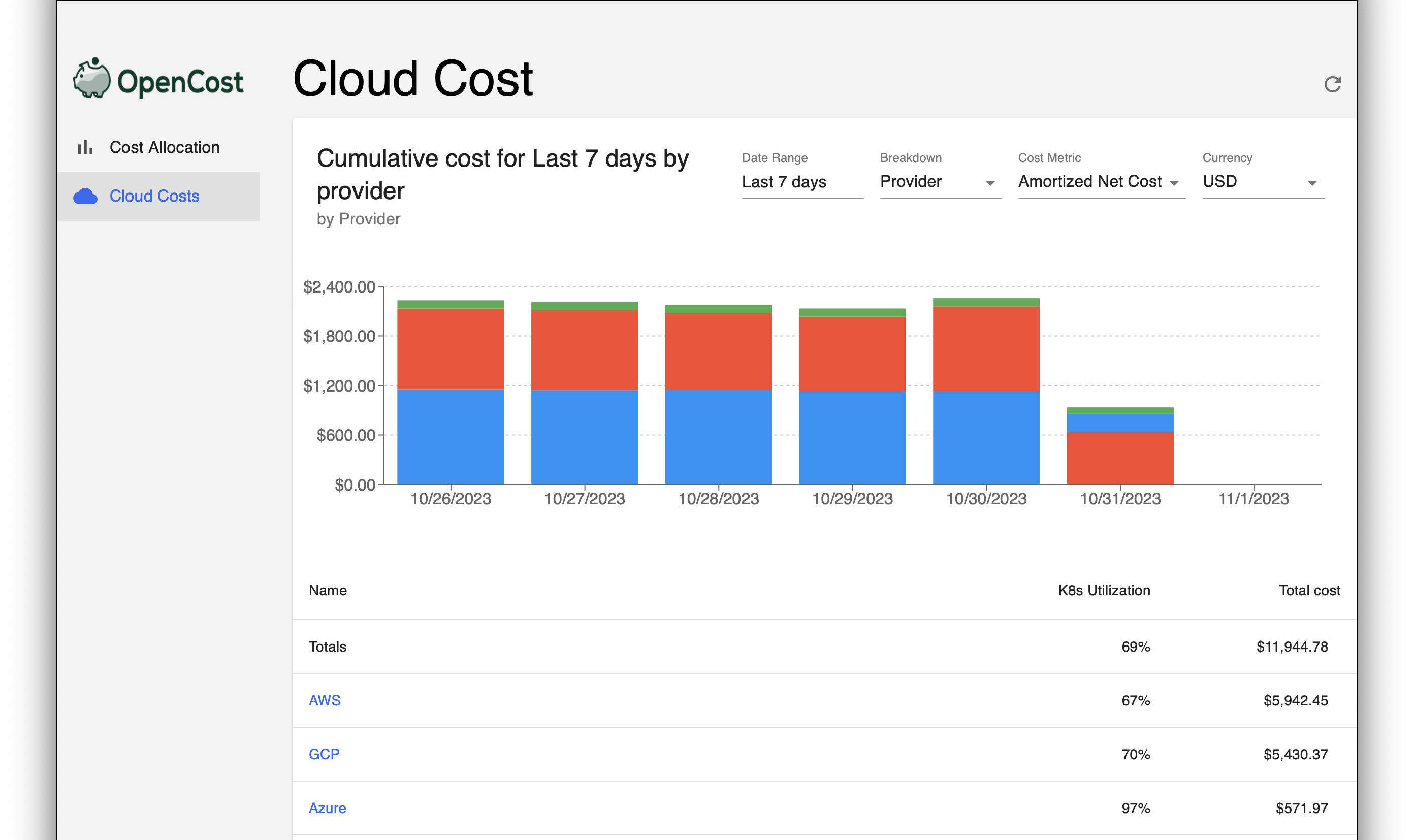
OpenCost is an open source cost monitoring tool for Kubernetes and cloud spend. It provides real-time cost allocation, multi-cloud monitoring, and support for on-prem clusters with custom pricing.
Key features include:
Source: OpenCost
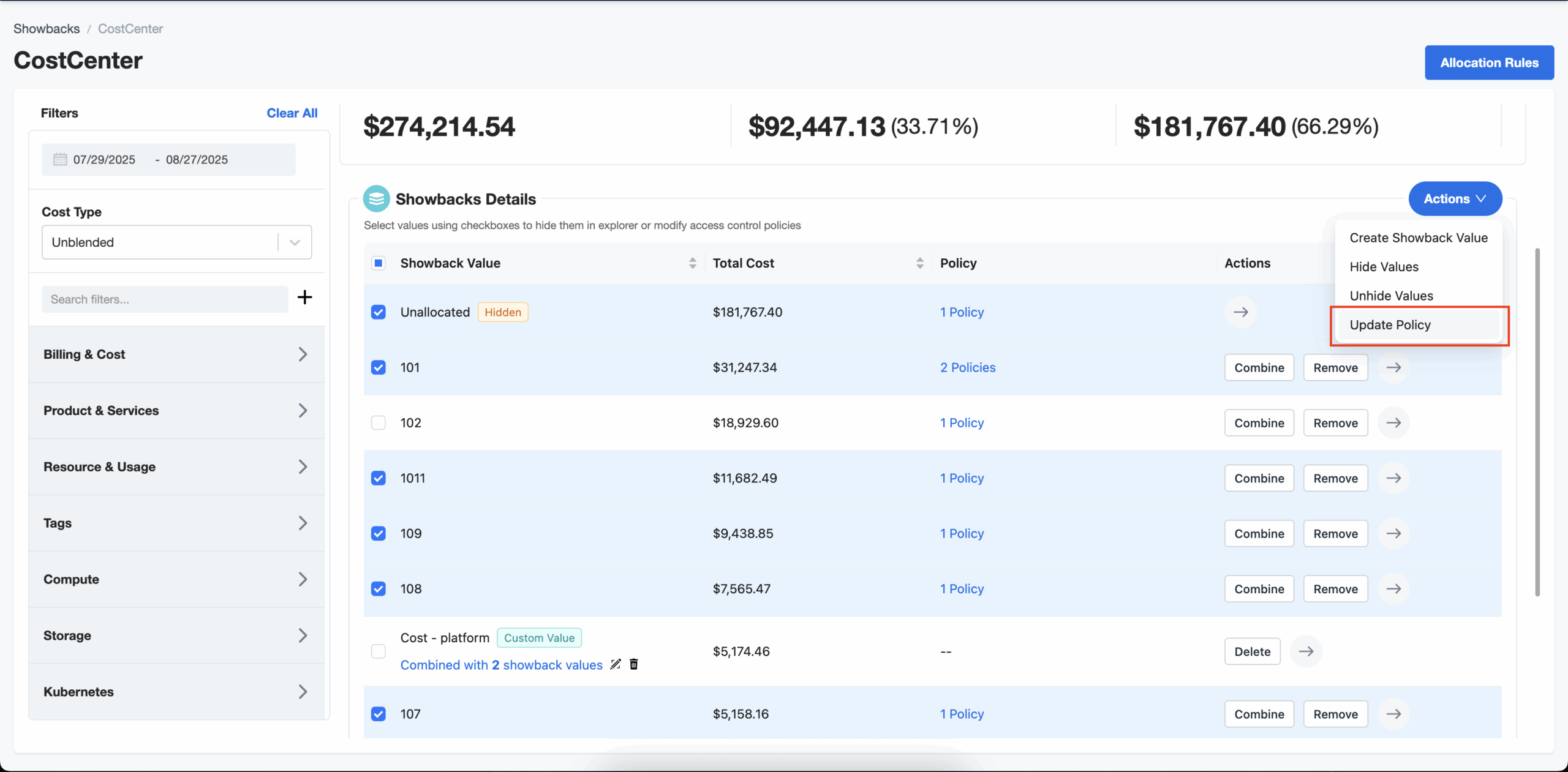
nOps offers Kubernetes compute and storage optimization with features for continuous tuning, purchasing optimization, and visibility for benchmarking and governance.
Key features include:
Source: nOps
The ability to attribute costs at a granular level enhances transparency and accountability within an organization. A Kubernetes cost management solution should map costs not only to clusters but to namespaces, labels, workloads, and potentially even down to individual deployments or business units. This visibility is critical for assigning ownership, understanding drivers of spend, and enabling effective chargeback or showback practices.
Granular cost attribution also supports more targeted optimization efforts. When teams can see exactly which applications or services are responsible for resource consumption, they can make better decisions for workload placement, sizing, and scaling.
Enterprises often operate multiple Kubernetes clusters across different cloud providers and geographic regions, making multi-cluster and multi-cloud support essential for accurate cost management. A solution should aggregate and normalize cost data from all clusters, regardless of where they are deployed, to present a unified view of organizational spend. This centralization is key for organizations pursuing hybrid or multi-cloud strategies or subject to regulatory constraints.
Multi-cloud support also streamlines governance and simplifies compliance with internal or external policies. By unifying billing, tagging, and reporting across providers like AWS, Azure, and Google Cloud, organizations can avoid fragmented insights and ensure consistent optimization practices.
Integration with your existing monitoring and observability stack, such as Prometheus, Grafana, or other APM tools, is crucial for getting maximum value from Kubernetes cost management. When cost metrics are accessible alongside performance and reliability data, engineers can correlate spend with system behavior and make data-driven decisions that balance cost and operational health. This reduces context-switching and helps teams get a holistic view of application efficiency.
Integration also enables more effective alerting, automation, and reporting workflows. By embedding cost insights directly into familiar dashboards and pipelines, organizations can enforce optimization efforts without disrupting engineering processes. Vendor support for common monitoring APIs and plugins simplifies adoption and accelerates time-to-value for Kubernetes cost management initiatives.
Learn more in our detailed guide to Kubernetes cost monitoring
Strong governance and flexible reporting features are necessary to distribute accountability and maintain financial discipline in dynamic Kubernetes environments. Solutions should offer customizable dashboards, budget alerts, role-based access controls, and detailed chargeback or showback capabilities. These tools enable stakeholders across engineering, finance, and leadership to track progress and make informed spending decisions.
FinOps support (formal processes that bridge engineering and finance) helps organizations operationalize cost optimization. A modern Kubernetes cost management tool should empower FinOps teams with automation, allocation policies, and collaboration features to continuously improve resource efficiencies. Reporting fosters transparency, supports audits, and simplifies regulatory compliance for organizations under strict financial controls.
For many organizations, the operational overhead of deploying and maintaining a new cost management tool is a significant consideration. Solutions should support straightforward installation, automated updates, and minimal resource footprint within clusters. Tools that are compatible with standard Kubernetes package managers (like Helm) or offer SaaS options further reduce friction during onboarding.
Ongoing maintenance, including scaling with cluster growth, handling version upgrades, and troubleshooting, is equally important. The best solutions provide comprehensive documentation, strong community or vendor support, and automated diagnostics to reduce manual intervention.
Kubernetes cost management is no longer optional, it’s essential for maintaining financial control and operational efficiency in cloud-native environments. As Kubernetes usage scales, so does the complexity of cost visibility and optimization. The solutions covered here offer varying approaches to allocation, rightsizing, reporting, and integration, making it critical to match the tool to your team’s architecture and FinOps maturity.