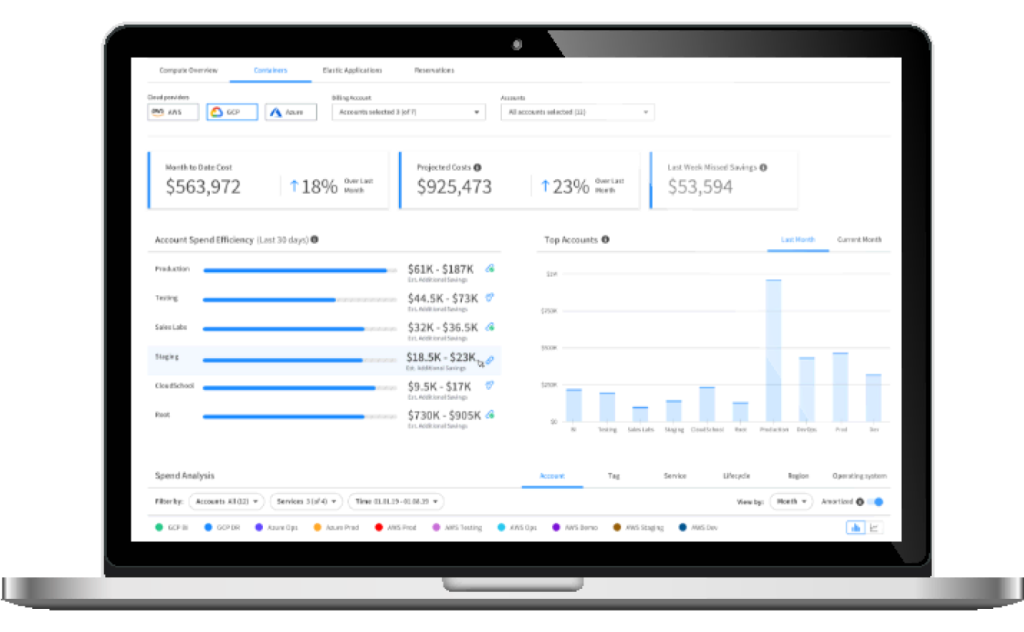
AWS cost management services are tools and platforms to help organizations monitor, analyze, and control their spending on Amazon Web Services. These services provide insights into usage patterns, cost drivers, and potential areas for optimizing resource consumption. By using these offerings, organizations can align their cloud spending with budgets, predict future costs, and avoid unnecessary expenses.
The range of AWS cost management services includes both native, first-party AWS solutions and a diverse ecosystem of third-party tools. First-party tools integrate deeply with AWS infrastructure and offer features like budget alerts, granular usage breakdowns, and cost forecasting.
Third-party offerings often provide more analytics, integrations with other cloud providers, and additional automation capabilities. Together, these tools help organizations maintain cloud cost visibility while ensuring resources are allocated efficiently and responsibly.
Editor’s note: Article has been updated to cover recent market trends and current features and capabilities of AWS cost management services as of 2026.
AWS cost management services include several capabilities that help teams understand and control cloud spending. These features focus on visibility, forecasting, governance, and optimization. Together, they allow organizations to track where money is spent, detect unusual usage, and make informed decisions about resource allocation.
To put AWS cost management in perspective, the global cloud cost management market is valued at USD 5.34 billion and is projected to reach USD 19.27 billion by 2033 according to recent market research, representing a compound annual growth rate (CAGR) of 17.6%. This growth reflects the rising importance of managing cloud spending as enterprises scale their cloud infrastructure. As more workloads move to cloud platforms, organizations need better tools to monitor usage, forecast costs, and prevent budget overruns.
A major driver of the cloud cost management market is the rapid adoption of multi-cloud and hybrid cloud environments. Many organizations now use multiple cloud providers to improve flexibility and resilience. However, this approach increases operational complexity and makes it harder to track and control spending. Cost management platforms address this challenge by providing centralized dashboards, real-time monitoring, and automated optimization tools.
The increasing use of AI, data analytics, and containerized workloads is also contributing to market expansion. These technologies often rely on dynamic scaling, which can lead to unpredictable cloud costs if not managed carefully.
Within the market, software solutions dominate, accounting for 68.4% of revenue in 2025. Organizations rely on software platforms for real-time cost visibility, usage analytics, automated optimization, budgeting, and financial reporting across cloud environments. However, services are expected to grow at the fastest rate.
Third party cost management services provide advanced cost optimization features and the ability to manage costs across multiple clouds. Here are a few popular solutions.
Finout offers a comprehensive suite of capabilities for AWS, designed to optimize and streamline cloud cost management.
Key features of Finout:
CloudCheckr provides visibility and control over cloud spending across AWS and Azure environments. It enables organizations to analyze both current and historical usage data, helping teams understand which resources are driving costs and how they are being consumed. The platform also supports continuous optimization by identifying inefficiencies and recommending actions such as rightsizing or leveraging commitment-based discounts.
Key features of CloudCheckr:
Amnic is a cloud cost management platform that uses AI agents to automate financial operations and simplify cost analysis. It replaces fragmented dashboards with a unified system that provides real-time insights, automated reporting, and faster anomaly detection. The platform is designed to reduce manual effort and make cost data accessible across finance, engineering, and leadership teams.
Key features of Amnic:
Cloudability is a FinOps platform that helps organizations manage and optimize cloud spending across multi-cloud environments. It provides detailed analytics and reporting to improve cost transparency and enables teams to connect cloud usage with business outcomes. The platform supports continuous optimization by identifying inefficiencies and recommending cost-saving actions.
Key features of Cloudability:
Kubex is a resource optimization platform focused on Kubernetes environments, using AI and machine learning to automate infrastructure tuning. It continuously analyzes workload behavior and applies optimizations such as scaling, rightsizing, and workload placement. The platform emphasizes safe automation with policy controls to ensure changes are applied without disrupting production systems.
Key features of Kubex:
In addition to third-party tools, AWS also offers its own cloud services, which are typically free but provide limited functionality.
AWS Cost Explorer is a native analytics tool that helps users visualize and analyze AWS cost and usage data over time. It provides an interactive interface where teams can explore spending patterns, identify cost drivers, and detect anomalies. Users can create custom reports and forecasts, and analyze data at different levels of granularity, from high-level summaries to resource-level insights.
Key features of AWS Cost Explorer:
AWS Billing Conductor is a billing customization tool that helps organizations align cloud costs with internal financial models. It allows users to define custom pricing rules, allocate shared costs, and create billing groups that reflect business structures. This is particularly useful for implementing chargeback or showback models across teams or customers.
Key features of AWS Billing Conductor:
AWS Budgets enables organizations to set spending and usage limits and track performance against those thresholds. It supports different types of budgets, including cost, usage, and reservation coverage, allowing teams to monitor financial and operational metrics. Alerts can be configured for both actual and forecasted spending, helping teams take action before costs exceed limits.
Key features of AWS Budgets:
AWS Cost and Usage Report (CUR) provides the most detailed view of AWS billing and usage data. It delivers granular line-item data for every resource and service, allowing organizations to perform in-depth analysis of their cloud costs. Reports are stored in Amazon S3 and can be integrated with analytics tools for further processing.
Key features of AWS Cost and Usage Report:
AWS Cost Allocation Tags allow organizations to categorize and track cloud spending using metadata assigned to resources. Tags consist of key-value pairs that represent attributes such as project, team, or application. Once activated, these tags are included in cost reports, enabling detailed cost attribution and analysis.
Key features of AWS Cost Allocation Tags:
Effective AWS cost management is essential for maintaining control over cloud spending and maximizing return on investment. By leveraging purpose-built cost management solutions, organizations gain the visibility and actionable insights needed to monitor usage, identify inefficiencies, and enforce financial governance.